These poems
These poems
they are things that I do
in the dark
reaching for you
whoever you are
and
are you ready?
These words
they are stones in the water
running away
These skeletal lines
they are desperate arms for my longing and love.
I am a stranger
learning to worship the strangers
around me
whoever you are
whoever I may become.
Estos Poemas
Estos poemas
son cosas que hago
en la oscuridad
buscándote
quienquiera que seas
¿y
estás listo?
Estas palabras
son piedras en el agua
que fluye.
Estos versos escuálidos
son los desesperados brazos de mi anhelo y de mi amor
Soy una extraña
aprendiendo a adorar a los extraños
a mi alrededor
quienquiera que seas
quienquiera que yo pueda llegar a ser.
CALLING ON ALL SILENT MINORITIES
HEY
C’MON
COME OUT
WHEREVER YOU ARE
WE NEED TO HAVE THIS MEETING
AT THIS TREE
AIN’ EVEN BEEN
PLANTED
YET
LLAMADO A TODAS LAS MINORÍAS SILENCIOSAS
HEY
VENGAN
SALGAN
DONDE QUIERA QUE ESTÉN
NECESITAMOS REUNIRNOS
EN ESTE ÁRBOL
QUE NO HA SIDO
PLANTADO
TODAVÍA
De: Directed by Desire: The Complete Poems of June Jordan (Copper Canyon Press, 2005).Traducción de Diana Bellesi en Palabra terrestre (poesía negra), Antología de Editorial Leviatán, Buenos Aires, 1998
El uso de mayúsculas es premeditado para enfatizar la llamada que lanza a todas las minorías sociales y la urgencia de trabajar en conjunto contra las amenazas y opresiones que comparten.
Poema Para Mi Amor
Cómo llegamos a estar una junto a la otra
esta noche
Dónde están las estrellas que nos muestran nuestro amor
inevitable
Afuera las hojas flamean como de costumbre en la oscuridad
y la lluvia
cae fresca y bendecida sobre la carne santa
los hombres negros esperan en la esquina un
espejismo femenino
Estoy asombrada por la paz
Es esta posibilidad de vos
dormida
y respirando en el aire tranquilo
The Bombing of Baghdad
1
began and did not terminate for 42 days
and 42 nights relentless minute after minute
more than 110,000 times
we bombed Iraq we bombed Baghdad
we bombed Basra/we bombed military
installations we bombed the National Museum
we bombed schools we bombed air raid
shelters we bombed water we bombed
electricity we bombed hospitals we
bombed streets we bombed highways
we bombed everything that moved/we
bombed everything that did not move we
bombed Baghdad
a city of 5.5 million human beings
we bombed radio towers we bombed
telephone poles we bombed mosques
we bombed runways we bombed tanks
we bombed trucks we bombed cars we bombed bridges
we bombed the darkness we bombed
the sunlight we bombed them and we
bombed them and we cluster bombed the citizens
of Iraq and we sulfur bombed the citizens of Iraq
and we napalm bombed the citizens of Iraq and we
complemented these bombings/these “sorties” with
Tomahawk cruise missiles which we shot
repeatedly by the thousands upon thousands
into Iraq
(you understand an Iraqi Scud missile
is quote militarily insignificant unquote and we
do not mess around with insignificant)
so we used cruise missiles repeatedly
we fired them into Iraq
And I am not pleased
I am not very pleased
None of this fits into my notion of “things going very well”
2
The bombing of Baghdad
did not obliterate the distance or the time
between my body and the breath
of my beloved
3
This was Custer’s Next-To-Last Stand
I hear Crazy Horse singing as he dies
I dedicate myself to learn that song
I hear that music in the moaning of the Arab world
4
Custer got accustomed to just doing his job
Pushing westward into glory
Making promises
Searching for the savages/their fragile
temporary settlements
for raising children/dancing down the rain/and praying
for the mercy of a herd of buffalo
Custer/he pursued these savages
He attacked at dawn
He murdered the men/murdered the boys
He captured the women and converted
them (I’m sure)
to his religion
Oh, how gently did he bid his darling fiancée
farewell!
How sweet the gaze her eyes bestowed upon her warrior!
Loaded with guns and gunpowder he embraced
the guts and gore of manifest white destiny
He pushed westward
to annihilate the savages
(“Attack at dawn!”)
and seize their territories
seize their women
seize their natural wealth
5
And I am cheering for the arrows
and the braves
6
And all who believed some must die
they were already dead
And all who believe only they possess
human being and therefore human rights
they no longer stood among the possibly humane
And all who believed that retaliation/revenge/defense
derive from God-given prerogatives of white men
And all who believed that waging war is anything
besides terrorist activity in the first
place and in the last
And all who believed that F-15s/F-16s/ “Apache”
helicopters/
B-52 bombers/smart bombs/dumb bombs/napalm/artillery/
battleships/nuclear warheads amount to anything other
than terrorist tools of a terrorist undertaking
And all who believed that holocaust means something
that only happens to white people
And all who believed that Desert Storm
signified anything besides the delivery of an American
holocaust against the peoples of the Middle East
All who believed these things
they were already dead
They no longer stood among the possibly humane
And this is for Crazy Horse singing as he dies
because I live inside his grave
And this is for the victims of the bombing of Baghdad
because the enemy traveled from my house
to blast your homeland
into pieces of children
and pieces of sand
And in the aftermath of carnage
perpetrated in my name
how should I dare to offer you my hand
how shall I negotiate the implications
of my shame?
My heart cannot confront
this death without relief
My soul will not control
this leaking of my grief
And this is for Crazy Horse singing as he dies
And here is my song of the living
who must sing against the dying
sing to join the living
with the dead
A Poem about Intelligence for my Brothers and Sisters
A few years back and they told me Black
means a hole where other folks
got brain / it was like the cells in the heads
of Black children was out to every hour on the hour naps.
Scientists called the phenomenon the
Notorious Jensen Lapse, remember?
Anyway I was thinking
about how to devise
a test for the wise
like a Stanford-Binet
for the C.I.A.
you know?
Take Einstein
being the most the unquestionable the outstanding
the maximal mind of the century
right?
And I’m struggling against this lapse leftover
from my Black childhood to fathom why
anybody should say so:
E=MC squared?
.
I try that on this old lady live on my block:
She sweeping away Saturday night from the stoop
and mad as can be because some absolute
jackass have left a kingsize mattress where
she have to sweep around it stains and all she
don’t want to know nothing about in the first place.
“Mrs. Johnson!” I say, leaning on the gate
between us: “What you think about somebody come up
with an E equals M C 2?”
“How you doin,” she answer me, sideways, like she don’t
want to let on she know I ain’
combed my hair yet and here it is
Sunday morning but still I have the nerve
to be bothering serious work with these crazy
questions about
“E equals what you say again, dear?”
Then I tell her, “Well
also this same guy? I think
he was undisputed Father of the Atom Bomb!”
“That right.” She mumbles or grumbles, not too politely
“And dint remember to wear socks when he put on
his shoes!” I add on (getting desperate).
At which point Mrs. Johnson take herself and her broom
a very big step down the stoop away from me.
“And never did nothing for nobody in particular
lessen it was a committee
and
used to say, ‘What time is it?’
and
you’d say, ‘Six o’clock.’
and
he’d say, ‘Day or night?’
and –
and he never made nobody a cup a tea
in his whole brilliant life!
and
[my voice rises slightly]
and
he dint never boogie neither: never!”
.
“Well,” say Mrs. Johnson, “Well, honey,
I do guess
that’s Genius for you.”
Poema sobre Intelecto para mis Hermanos y Hermanas
Hace unos años me dicieron que Negro es un seso hueco y otra gente
tienen cerebros / casi como las células dentro las cabezas de niños negros
estaban fuera tomando una siesta a la hora en punto – cada hora.
.
El Científico llamé este fenómeno El Lapsus Arthur Jensen (de mala fama) – ¿no recuerdas?
Bien, estoy pensando en idear una prueba para los eruditos – los sabios, ¿sabes? – algo como una Prueba Cociente Intelectual Stanford-Binet por la CIA – ¿comprendes?
Por ejemplo…El señor doctor Einstein, incuestionablemente el “cerebro” más espectacular del siglo – ¿no?
.
Y estoy luchando contra estas sobras-Lapsus de mi niñez negra, y me pregunto por que alguien deciría: E = MC Squared – la equivalencia entre la masa y la energía.
Intento discutir sobre ésto con la vieja mujer que vive en mi cuadra…
Está escobando la escalera de entrada en una noche de sábado, enojado porque un “burro” dejó un colchón de cama king-size – manchas y demás – en frente de su casa, y no quiere saber nada de éso en primer lugar.
.
Inclinándome en la verja, digo: “Señora Johnson, ¿qué piensas en alguien que se inventa E = MC Squared?”
“¿Cómo te va?” me responde de su lado, como no quiere permitirme saber que tengo pelo no peinado (esta mañana de domingo) y que tengo el atrevimiento de molestarle durante una tarea seria con mis preguntas locas…
“¿E igual a que, cariño?”
Pues le digo: “Este tipo que dijo éso, ¡creo que fue El Padre No Refutado de La Bomba Atómica!”
“Sí, eso es,” murmura, no tan amablemente.
“¡Y siempre olvidó ponerse calcetines con sus zapatos!”– agrego (un poco deseperada).
En este momento Señora Johnson se aleja de mí, con su escoba, y da un gran paso atrás en la escalera.
“Y nunca no hizo nada para nadie sino en una comisión…Y decía “¿Qué hora es?” y alguien decía “Son las seis.” Y él decía “– ¿de la mañana o de la tarde?”…¡Y nunca no hirvió agua para una taza de té para nadie durante su entera vida brillante!…¡Y [ mi voz se eleva un poco ] nunca no bugui bugui ni nunca tampoco, no!”
“¿Y bien?” dice ella. “Supongo, sí – cielo – que eso es lo que llaman el Genio, ¿no?”
Versión de Alexander Best
.
Poem about My Rights
Even tonight and I need to take a walk and clear
my head about this poem about why I can’t
go out without changing my clothes my shoes
my body posture my gender identity my age
my status as a woman alone in the evening/
alone on the streets/alone not being the point/
the point being that I can’t do what I want
to do with my own body because I am the wrong
sex the wrong age the wrong skin and
suppose it was not here in the city but down on the beach/
or far into the woods and I wanted to go
there by myself thinking about God/or thinking
about children or thinking about the world/all of it
disclosed by the stars and the silence:
I could not go and I could not think and I could not
stay there
alone
as I need to be
alone because I can’t do what I want to do with my own
body and
who in the hell set things up
like this
and in France they say if the guy penetrates
but does not ejaculate then he did not rape me
and if after stabbing him if after screams if
after begging the bastard and if even after smashing
a hammer to his head if even after that if he
and his buddies fuck me after that
then I consented and there was
no rape because finally you understand finally
they fucked me over because I was wrong I was
wrong again to be me being me where I was/wrong
to be who I am
which is exactly like South Africa
penetrating into Namibia penetrating into
Angola and does that mean I mean how do you know if
Pretoria ejaculates what will the evidence look like the
proof of the monster jackboot ejaculation on Blackland
and if
after Namibia and if after Angola and if after Zimbabwe
and if after all of my kinsmen and women resist even to
self-immolation of the villages and if after that
we lose nevertheless what will the big boys say will they
claim my consent:
Do You Follow Me: We are the wrong people of
the wrong skin on the wrong continent and what
in the hell is everybody being reasonable about
and according to the Times this week
back in 1966 the C.I.A. decided that they had this problem
and the problem was this man named Nkrumah so they
killed him and before that it was Patrice Lumumba
and before that it was my father on the campus
of my Ivy League school and my father afraid
to walk into the cafeteria because he said he
was wrong the wrong age the wrong skin the wrong
gender identity and he was paying my tuition and
before that
it was my father saying I was wrong saying that
I should have been a boy because he wanted one/a
boy and that I should have been lighter skinned and
that I should have had straighter hair and that
I should not be so boy crazy but instead I should
just be one/a boy and before that
it was my mother pleading plastic surgery for
my nose and braces for my teeth and telling me
to let the books loose to let them loose in other
words
I am very familiar with the problems of the C.I.A.
and the problems of South Africa and the problems
of Exxon Corporation and the problems of white
America in general and the problems of the teachers
and the preachers and the F.B.I. and the social
workers and my particular Mom and Dad/I am very
familiar with the problems because the problems
turn out to be
me
I am the history of rape
I am the history of the rejection of who I am
I am the history of the terrorized incarceration of
my self
I am the history of battery assault and limitless
armies against whatever I want to do with my mind
and my body and my soul and
whether it’s about walking out at night
or whether it’s about the love that I feel or
whether it’s about the sanctity of my vagina or
the sanctity of my national boundaries
or the sanctity of my leaders or the sanctity
of each and every desire
that I know from my personal and idiosyncratic
and indisputably single and singular heart
I have been raped
be-
cause I have been wrong the wrong sex the wrong age
the wrong skin the wrong nose the wrong hair the
wrong need the wrong dream the wrong geographic
the wrong sartorial I
I have been the meaning of rape
I have been the problem everyone seeks to
eliminate by forced
penetration with or without the evidence of slime and/
but let this be unmistakable this poem
is not consent I do not consent
to my mother to my father to the teachers to
the F.B.I. to South Africa to Bedford-Stuy
to Park Avenue to American Airlines to the hardon
idlers on the corners to the sneaky creeps in
cars
I am not wrong: Wrong is not my name
My name is my own my own my own
and I can’t tell you who the hell set things up like this
but I can tell you that from now on my resistance
my simple and daily and nightly self-determination
may very well cost you your life
Poema sobre mis derechos
Incluso esta noche y necesito caminar y despejar
mi cabeza de este poema sobre por qué no puedo
salir sin cambiarme de ropa de zapatos
de la postura de mi cuerpo de mi identidad de género de mi edad
de mi condición de mujer sola al atardecer/
sola en las calles/sola no siendo el caso/
el caso es que no puedo hacer lo que quiero
hacerlo con mi propio cuerpo porque pertenezco al sexo
equivocado a la edad equivocada a la piel equivocada y
supón que no era aquí en la ciudad sinó allá en la playa/
o en lo profundo del bosque y quisiese ir
allá sola mi alma para divagar sobre Dios/ o
los niños o pensar sobre el mundo/ y todo eso
revelado por las estrellas y el silencio:
no podría ir y no podría pensar y no podría
quedarme ahí
sola
como lo necesito
sola porque no puedo hacer lo que quiero con mi propio
cuerpo y
quién mierda hizo las cosas así
de este modo
y en Francia dicen que si el tipo penetra
pero no eyacula entonces no me violó
y si después de acuchillarlo si después de los gritos si
después de rogarle al bastardo y si incluso después de golpearle
la cabeza con un martillo si incluso después de eso él
y sus amigotes me fornican después de todo eso
entonces fui yo la que lo permití y no hubo
ninguna violación porque en último caso entienden en último caso
me fornicaron porque yo estaba
equivocada estaba equivocada otra vez de ser yo siendo yo en el lugar en que me
encontraba/
equivocada de ser quién soy
lo que es exactamente como Sudáfrica
penetrando en Namibia penetrando en
Angola y acaso eso significa quiero decir cómo puedes saber si
Pretoria eyacula cómo se reconocerá la evidencia la
prueba de la eyaculación de la bota militar del Monstruo sobre Tierranegra
y si
después de Namibia y si después de Angola y si después de Zimbawe
y si después de que todos mis parientes y mujeres resistan incluso hasta el punto
de auto-inmolar las villas y si después de eso
igual perdemos qué dirán entonces los muchachotes demandarán
acaso mi aprobación:
Logras Seguirme: Somos el pueblo equivocado de
piel equivocada en el continente equivocado y sobre qué
diablos están todos siendo razonables
y de acuerdo al Times esta semana
allá por 1966 la C.I.A. decidió que tenían este problema
y el problema era un hombre llamado Nkrumah así es que
lo mataron y antes de eso fue Patrice Lumumba
y antes de eso fue mi padre en el campus
de mi escuela de Ivy League y mi padre con miedo
de entrar a la cafetería porque dijo que él
estaba equivocado tenía la edad equivocada la piel equivocada pertenecía al
género equivocado y estaba pagando mi escolaridad y
antes de eso
era mi padre diciendo que yo estaba equivocada diciendo que
debería haber sido niño porque él quería uno/ un
niño y que debería haber tenido la piel más clara y
que debería haber tenido el pelo más liso y que
no debería ser tan amante de los muchachos que en cambio yo debería
haber sido uno/un muchacho y antes de eso
era mi madre implorando por una cirugía plástica para
mi naríz y frenillos para mis dientes y diciéndome
que suelte los libros que los suelte en otras
palabras
que estoy muy interiorizada de los problemas de la C.I.A.
y los problemas de Sudáfrica y los problemas
de la Corporación Exxon y en general de los problemas
de la América blanca y los problemas de los profesores
y los predicadores y los del F.B.I. y los trabajadores
sociales y de los de mis propios padre y madre/estoy muy
interiorizada de los problemas porque los problemas
resultan ser
yo
yo soy la historia de la violación
yo soy la historia del rechazo a quien soy
yo soy la historia de la terrorífica encarcelación de
mi misma
yo soy la historia de la agresión y de los ejércitos
ilimitados en contra de todo lo que quiera hacer con mi mente
y mi cuerpo y mi alma y
sin importar si se trata de caminar en la noche
o si se trata del amor que siento o
si se trata de la santidad de mi vagina o
de la santidad de mis fronteras nacionales
o la santidad de mis líderes o la santidad
de todos y cada uno de los deseos
que yo conozco de mi corazón personal e idiosincrático
e indiscutiblemente soltero y singular
he sido violada
porque me he equivocado, soy del sexo equivocado la edad equivocada
la piel equivocada la nariz equivocada el pelo equivocado la
necesidad equivocada el sueño equivocado la geografía equivocada
el sastre equivocado yo
yo he sido la figura de la violación
yo he sido el problema que todos buscan
eliminar a través de la penetración
forzada con o sin la evidencia de secreciones y/
pero dejemos esto claro este poema
no autoriza nada yo no me entrego
a mi madre a mi padre a mis maestros al
F.B.I. a Sudáfrica a Bedford-Stuy
a Park Avenue a American Airlines a los ociosos
de pene erecto en las esquinas a los rastreros
en autos
no estoy equivocada: Equivocada no es mi nombre
Mi nombre es mío mío mío
y no puedo decirte quién crestas determinó que las cosas eran así
pero puedo decirte que de ahora en adelante mi resistencia
mi simple y cotidiana y nocturna auto-determinación
puede muy bien costarte la vida
Traducción de la poeta Verónica Zondek(ver en esta pagina)en Poema sobre mis derechos, de June Jordan (Santiago de Chile, Cuadro de Tiza Ediciones, 2010)
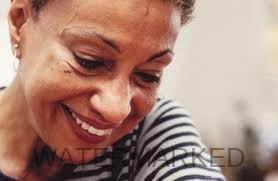
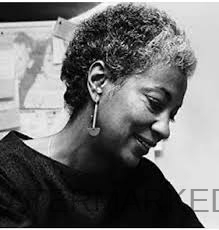
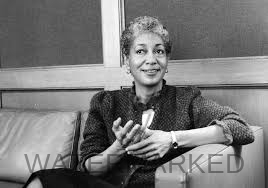
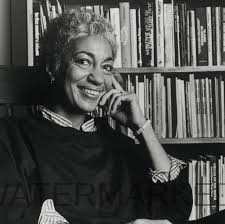
June Millicent Jordan (Harlem, EE.UU., 9 de julio de 1936-Berkeley, EE.UU., 14 de junio de 2002). Poeta, ensayista, profesora y activista jamaicano-estadounidense. Figura destacada en los movimientos por los derechos civiles, feminista, antibélico y LGBTQ del siglo XX. Fundó el programa “Poetry for the People” en la Universidad de California, Berkeley, cuyo objetivo era llevar la poesía y la literatura a comunidades marginadas. Jordan era conocida como «la poeta del pueblo».
Hija única de Mildred Maud Jordan, enfermera, y de Granville Ivanhoe, empleado de correos, ambos inmigrantes jamaicanos. La infancia de June estuvo marcada por los golpes de su padre quien ademas la llamaba “Damn black devil child” (Maldita negra, niña demonio) y por la segregación racial.
Jordan asistió a la escuela preparatoria Northfield Mount Hermon, predominantemente blanca donde comenzó desarrollar su talento para escribir. Cuando muere su madre (se suicidó) se mudó de Harlem a Brooklyn. En 1953 Jordan asistió al Barnard College. Posteriormente Jordan en su libro de 1981 Civil Wars, recordaría su paso por el Barnard de esta forma:
«Nadie me presentó un solo autor, poeta, historiador, personaje o idea negra sobre la materia. Tampoco se me asignó una mujer soltera para estudiar como pensadora, escritora, poeta o fuerza vital. Nada de lo que aprendí aquí disminuyó mi sensación de dolor o confusión y amargura en relación con mis orígenes: mi calle, mi familia, mis amigos. Nada me mostró cómo podría tratar de alterar las realidades política y económica que subyacen a nuestra condición negra en la América blanca.»
A los 19 años se casó con Michael Meyer, y ambos se trasladaron a estudiar a la Universidad de Chicago. Más tarde, regresó a Barnard y se licenció. En 1958, a los 22 años, Jordan tuvo a su único hijo, Christopher David Meyer. La pareja se divorció en 1965 y Jordan crio sola a su hijo.
Jordan comenzó su carrera docente en 1967 en el City College de Nueva York . Entre 1968 y 1978 enseñó en la Universidad de Yale, en el Sarah Lawrence College y en el Connecticut College. Se convirtió en directora del Centro de Poesía de SUNY en Stony Brook y fue profesora de inglés allí desde 1978 hasta 1989. De 1989 a 2002 fue profesora titular en los departamentos de inglés, de estudios de la mujer y de estudios afroamericanos de la Universidad de California, Berkeley donde pronto se dedicó a la presentación de Poesía Afroamericana y Poesía Contemporánea de Mujeres. En ambos cursos, se aseguró de que los escritos de los estudiantes ocuparan el mismo espacio y tiempo, junto con los de James Weldon Johnson o Adrienne Rich, por ejemplo. Y se propuso publicar la poesía de los estudiantes en sus propias antologías y distribuir estos libros en lecturas públicas estudiantiles, organizadas y publicitadas con al menos el mismo cuidado y dedicación que la que se le daría a una aparición en el campus por parte de un «Poeta Destacado» visitante.
En 1991 fundó en Berkeley el programa «Poesía para el pueblo». Su objetivo era inspirar y capacitar a los estudiantes para usar la poesía como un medio de expresión artística. Durante su primer semestre, y cada semestre posterior, el curso atrajo a estudiantes de primer y último año de la Facultad de Derecho Boalt: hombres, mujeres, afroamericanos, asiático-americanos, latinoamericanos, árabe-americanos, angloamericanos, gays, lesbianas, heterosexuales, personas sin discapacidad o con discapacidad, que podían cursar este curso de poesía sin experiencia previa en escritura.
June Jordan creó Poesía para el Pueblo con tres principios rectores en mente:
-Que los estudiantes no se tomarán en serio a menos que quienes les enseñamos les honremos y respetemos de todas las maneras prácticas posibles.
-Que las palabras pueden cambiar el mundo y salvarnos la vida.
-Que la poesía es el arte supremo y el servicio más exigente, dedicado a nuestro uso más serio e imaginativo de verbos y sustantivos en nombre de todo aquello y de quienquiera que amemos.
En 1995, después de que Jordan y varios de sus alumnos publicaran Poesía para el Pueblo: Un Plan Revolucionario de June Jordan a través de Routledge Press, cientos de organizaciones en todo el país han adoptado este plan no solo como referencia, sino también como principio rector en sus propios talleres y programas de poesía. La gira del libro para promocionar esta publicación única y singular llevó a sus alumnos a la ciudad de Nueva York e instituciones como Hunter College, NYU, Academy of American Poets, Pen American Center, Nuyorican Cafe, Barnard College y The New School. Además, numerosos exalumnos de Poesía para el Pueblo han sido incluidos en antologías, publicados y premiados.
En una entrevista con el Daily Californian el 19 de noviembre de 1998, la profesora Jordan afirmó que el objetivo de Poesía para el Pueblo «es hacer audible lo inaudible y visible lo invisible».
Tras el gran éxito del tercer semestre del programa, un grupo de jóvenes poetas quiso hacer de la Poesía para el Pueblo una forma de vida. Como resultado, la profesora Jordan decidió instituir un curso llamado «La Enseñanza y la Escritura de Poesía». Los estudiantes interesados colaboraban estrechamente con ella y, a su vez, se convertían en profesores de otros estudiantes. Fué un éxito y la práctica continúa hoy en día, ya que estudiantes de pregrado y posgrado facilitan grupos, imparten conferencias sobre diversos temas y asumen diversos puestos de liderazgo.
Como poeta el primer libro publicado por Jordan fue una colección de poemas para niños Who Look at Me (1969), Le siguieron 27 libros más a lo largo de su vida, y uno (Algunos de nosotros no morimos: Ensayos recopilados y nuevos ) que estaba en prensa cuando murió.
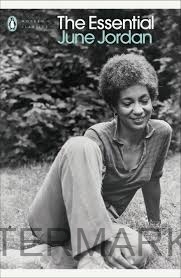
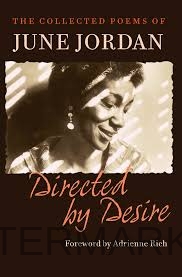
Póstumamente también se han publicado: Directed by Desire: The Complete Poems of June Jordan (Copper Canyon Press, 2005).(Dirigido por el deseo: Los poemas recopilados de June Jordan). El poemario recoge todos los poemas publicados en vida a lo largo de más de diez libros, e incluye algunos poemas todavía inéditos en la fecha de su muerte. En total la antología cuenta con más de seiscientos poemas. Y la colección de poesía de 1970 Soul Script, editada por Jordan, ha sido reeditada.
Sus colecciones de ensayos políticos incluyen Affirmative Acts: Political Essays (Anchor Books, 1998) y On Call: Political Essays (South End Press, 1985).
En el año 2000 Jordan publico sus memorias : Soldier: A Poet’s Childhood.
Como columnista su firma era frecuente en The Progressive, The Village Voice, The New York Times, The American Poetry Review y The Nation, entre otros .
Jordan recibió numerosos honores y premios, incluyendo una beca Rockefeller en 1969-70 para escritura creativa, una beca Yaddo en 1979, una beca de la National Endowment for the Arts en 1982 y el Premio al Logro de Informes Internacionales de la Asociación Nacional de Periodistas Negros en 1984. También ganó el Premio de Escritores Lila Wallace Reader’s Digest de 1995 a 1998, así como el Premio Ground Breakers-Dream Makers de The Woman’s Foundation en 1994.
Fue incluida en Who’s Who in America desde 1984 hasta su muerte. Recibió la Conferencia Distinguida del Canciller de la Universidad de California en Berkeley y el Premio Libertad para Escribir del Oeste del PEN Center USA (1991).
June Jordan falleció en junio de 2002. Fue reconocida por su férreo compromiso con los derechos humanos y el activismo político. Ha sido una de las escritoras jamaiquinas-estadounidenses más publicadas y aclamadas de su generación.
A lo largo de una carrera que produjo veintisiete volúmenes de poemas, ensayos, libretos y obras para niños, Jordan abordó las luchas fundamentales de su época: los derechos civiles, los derechos de las mujeres y la libertad sexual. Prolífica escritora de diversos géneros, su poesía es conocida por su inmediatez y accesibilidad, así como por su interés en la identidad y la representación de la experiencia personal y vivida; su poesía es a menudo profundamente autobiográfica. Su obra también imagina con frecuencia una noción radical y globalizada de solidaridad entre los marginados y oprimidos del mundo.
Gracias a su visión y al esfuerzo constante de sus estudiantes su legado sigue vigente.
Según la poeta Adriene Rich :
«June Jordan quería que sus lectores, oyentes y estudiantes sintieran su propio poder latente, el poder de la palabra, de la acción, de su propia belleza y de su valor intrínseco; quería que cada uno de nosotros entendiera que el aislamiento puede dejarnos indefensos y paralizados»
Enlaces de interés :
https://www.puroversorevista.com.ar/2020/10/june-jordan-el-maldito-demonio-negro.html
https://www.researchgate.net/publication/352707652_La_Interseccionalidad_En_La_Poesia_De_June_Jordan
Fuentes de la bio:
https://web.archive.org/web/20110319042524/http://poetryforthepeople.org/history
https://www.poetryfoundation.org/poets/june-jordan




Deja una respuesta