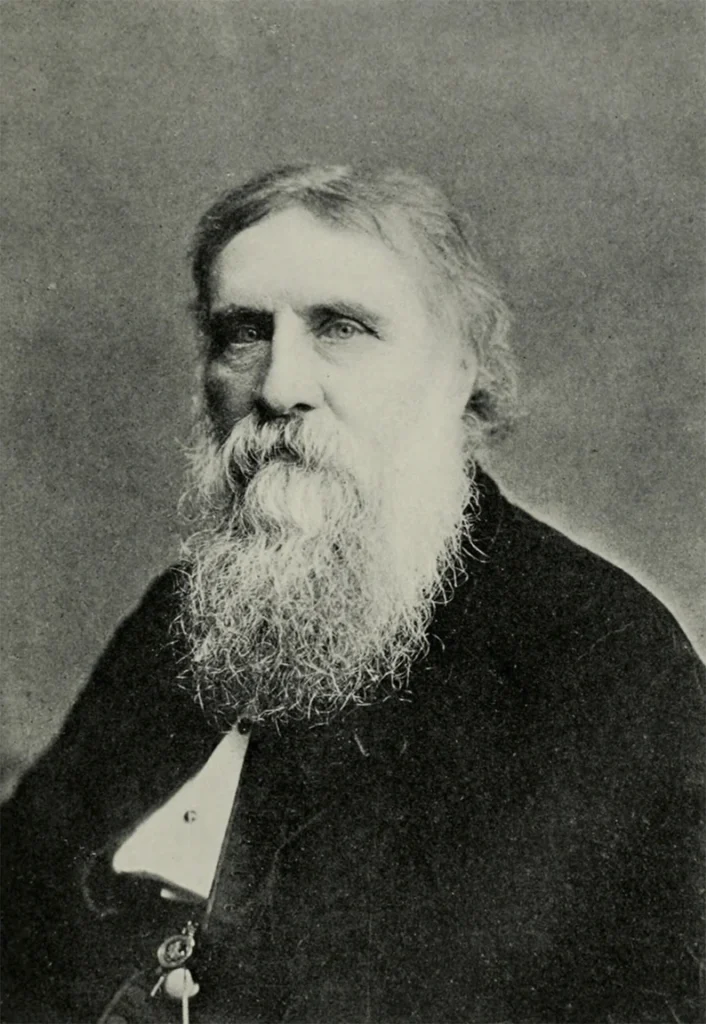
«Las fuerzas más grandes residen en la región de lo inaprensible»
MacDonald
Two Rondels
I.
When, in the mid-sea of the night,
I waken at thy call, O Lord,
The first that troop my bark aboard
Are darksome imps that hate the light,
Whose tongues are arrows, eyes a blight–
Of wraths and cares a pirate horde–
Though on the mid-sea of the night
It was thy call that waked me, Lord.
Then I must to my arms and fight–
Catch up my shield and two-edged sword,
The words of him who is thy word–
Nor cease till they are put to flight;
Then in the mid-sea of the night
I turn and listen for thee, Lord.
II.
There comes no voice from thee, O Lord,
Across the mid-sea of the night!
I lift my voice and cry with might:
If thou keep silent, soon a horde
Of imps again will swarm aboard,
And I shall be in sorry plight
If no voice come from thee, my Lord,
Across the mid-sea of the night.
There comes no voice; I hear no word!
But in my soul dawns something bright:-
There is no sea, no foe to fight!
Thy heart and mine beat one accord:
I need no voice from thee, O Lord,
Across the mid-sea of the night.
After the Fashion of an Old Emblem
I have long enough been working down in my cellar,
Working spade and pick, boring-chisel and drill;
I long for wider spaces, airy, clear-dark, and stellar:
Successless labour never the love of it did fill.
More profit surely lies in a holy, pure quiescence,
In a setting forth of cups to catch the heavenly rain,
In a yielding of the being to the ever waiting presence,
In a lifting of the eyes upward, homeward again!
Up to my garret, its storm-windows and skylights!
There I’ll lay me on the floor, and patient let the sun,
The moon and the stars, the blueness and the twilights
Do what their pleasure is, and wait till they have done.
But, lo, I hear a waving on the roof of great pinions!
’Tis the labour of a windmill, broad-spreading to the wind!
Lo, down there goes a. shaft through all the house-dominions!
I trace it to a cellar, whose door I cannot find.
But there I hear ever a keen diamond-drill in motion,
Now fast and now slow as the wind sits in the sails,
Drilling and boring to the far eternal ocean,
The living well of all wells whose water never fails.
So now I go no more to the cellar to my labour,
But up to my garret where those arms are ever going;
There the sky is ever o’er me, and the wind my blessed neighbour,
And the prayer-handle ready turns the sails to its blowing.
Blow, blow, my blessed wind; oh, keep ever blowing!
Keep the great windmill going full and free;
So shall the diamond-drill down below keep going
Till in burst the waters of God’s eternal sea.
Rest
I.
When round the earth the Father’s hands
Have gently drawn the dark;
Sent off the sun to fresher lands,
And curtained in the lark;
’Tis sweet, all tired with glowing day,
To fade with fading light,
And lie once more, the old weary way,
Upfolded in the night.
If mothers o’er our slumbers bend,
And unripe kisses reap,
In soothing dreams with sleep they blend,
Till even in dreams we sleep.
And if we wake while night is dumb,
’Tis sweet to turn and say,
It is an hour ere dawning come,
And I will sleep till day.
II.
There is a dearer, warmer bed,
Where one all day may lie,
Earth’s bosom pillowing the head,
And let the world go by.
There come no watching mother’s eyes,
The stars instead look down;
Upon it breaks, and silent dies,
The murmur of the town.
The great world, shouting, forward fares:
This chamber, hid from none,
Hides safe from all, for no one cares
For him whose work is done.
Cheer thee, my friend; bethink thee how
A certain unknown place,
Or here or there, is waiting now,
To rest thee from thy race.
III.
Nay, nay, not there the rest from harms,
The still composed breath!
Not there the folding of the arms,
The cool, the blessed death!
That
needs no curtained bed to hide
The world with all its wars,
No grassy cover to divide
From sun and moon and stars.
It is a rest that deeper grows
In midst of pain and strife;
A mighty, conscious, willed repose,
The death of deepest life.
To have and hold the precious prize
No need of jealous bars;
But windows open to the skies,
And skill to read the stars!
IV.
Who dwelleth in that secret place,
Where tumult enters not,
Is never cold with terror base,
Never with anger hot.
For if an evil host should dare
His very heart invest,
God is his deeper heart, and there
He enters in to rest.
When mighty sea-winds madly blow,
And tear the scattered waves,
Peaceful as summer woods, below
Lie darkling ocean caves:
The wind of words may toss my heart,
But what is that to me!
Tis but a surface storm-thou art
My deep, still, resting sea.
To Aubrey De Vere
Ray of the Dawn of Truth, Aubrey de Vere,
Forgive my play fantastic with thy name,
Distilling its true essence by the flame
Which Love ‘neath Fancy’s limbeck lighteth clear.
I know not what thy semblance, what thy cheer;
If, as thy spirit, hale thy bodily frame,
Or furthering by failure each high aim;
If green thy leaf, or, like mine, growing sear;
But this I think, that thou wilt, by and by–
Two journeys stoutly, therefore safely trod–
We laying down the staff, and He the rod–
So look on me I shall not need to cry–
‘We must be brothers, Aubrey, thou and I:
We mean the same thing-will the will of God!’
To my Sister: on Her Twenty-First Birthday
I.
Old fables are not all a lie
That tell of wondrous birth,
Of Titan children, father Sky,
And mighty mother Earth.
Yea, now are walking on the ground
Sons of the mingled brood;
Yea, now upon the earth are found
Such daughters of the Good.
Earth-born, my sister, thou art still
A daughter of the sky;
Oh, climb for ever up the hill
Of thy divinity!
To thee thy mother Earth is sweet,
Her face to thee is fair;
But thou, a goddess incomplete,
Must climb the starry stair.
II.
Wouldst thou the holy hill ascend,
Wouldst see the Father’s face?
To all his other children bend,
And take the lowest place.
Be like a cottage on a moor,
A covert from the wind,
With burning fire and open door,
And welcome free and kind.
Thus humbly doing on the earth
The things the earthly scorn,
Thou shalt declare the lofty birth
Of all the lowly born.
III.
Be then thy sacred womanhood
A sign upon thee set,
A second baptism—understood—
For what thou must be yet.
For, cause and end of all thy strife,
And unrest as thou art,
Still stings thee to a higher life
The Father at thy heart.
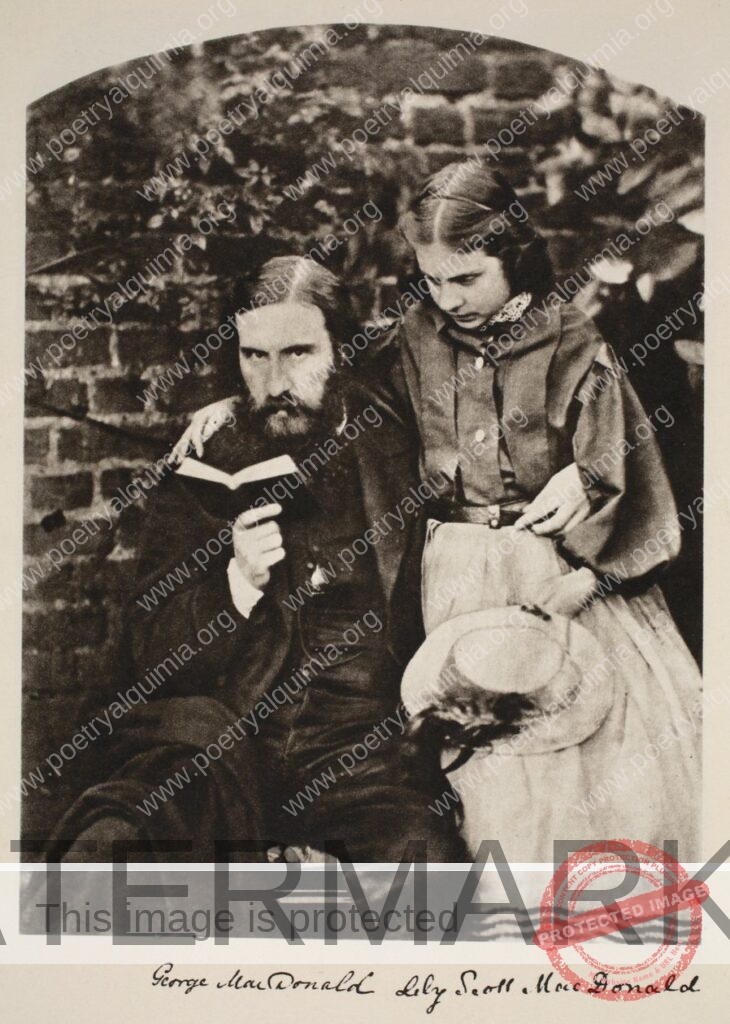
George MacDonald y su hija Lily 14th October 1863
Christmas, 1884
Though in my heart no Christmas glee,
Though my song-bird be dumb,
Jesus, it is enough for me
That thou art come.
What though the loved be scattered far,
Few at the board appear,
In thee, O Lord, they gathered are,
And thou art here.
And if our hearts be low with lack,
They are not therefore numb;
Not always will thy day come back–
Thyself will come!
Songs of the Winter Days
I.
The sky has turned its heart away,
The earth its sorrow found;
The daisies turn from childhood’s play,
And creep into the ground.
The earth is black and cold and hard;
Thin films of dry white ice,
Across the rugged wheel-tracks barred,
The children’s feet entice.
Dark flows the stream, as if it mourned
The winter in the land;
With idle icicles adorned,
That mill-wheel soon will stand.
But, friends, to say ’tis cold, and part,
Is to let in the cold;
We’ll make a summer of the heart,
And laugh at winter old.
II.
With vague dead gleam the morning white
Comes through the window-panes;
The clouds have fallen all the night,
Without the noise of rains.
As of departing, unseen ghost,
Footprints go from the door;
The man himself must long be lost
Who left those footprints hoar!
Yet follow thou; tread down the snow;
Leave all the road behind;
Heed not the winds that steely blow,
Heed not the sky unkind;
For though the glittering air grow dark,
The snow will shine till morn;
And long ere then one dear home-spark
Will winter laugh to scorn.
III.
Oh wildly wild the roaring blast
Torments the fallen snow!
The wintry storms are up at last,
And care not how they go!
In foam-like wreaths the water hoar,
Rapt whistling in the air,
Gleams through the dismal twilight frore;
A region in despair,
A spectral ocean lies outside,
Torn by a tempest dark;
Its ghostly billows, dim descried,
Leap on my stranded bark.
Death-sheeted figures, long and white,
Rave driving through the spray;
Or, bosomed in the ghastly night,
Shriek doom-cries far away.
IV.
A morning clear, with frosty light
From sunbeams late and low;
They shine upon the snow so white,
And shine back from the snow.
Down tusks of ice one drop will go,
Nor fall: at sunny noon
‘Twill hang a diamond-fade, and grow
An opal for the moon.
And when the bright sad sun is low
Behind the mountain-dome,
A twilight wind will come and blow
Around the children’s home,
And puff and waft the powdery snow,
As feet unseen did pass;
While, waiting in its bed below,
Green lies the summer grass.
Hope Deferred
Summer is come again. The sun is bright,
And the soft wind is breathing. Airy joy
Is sparkling in thine eyes, and in their light
My soul is shining. Come; our day’s employ
Shall be to revel in unlikely things,
In gayest hopes, fondest imaginings,
And make-believes of bliss. Come, we will talk
Of waning moons, low winds, and a dim sea;
Till this fair summer, deepening as we walk,
Has grown a paradise for you and me.
But ah, those leaves!-it was not summer’s mouth
Breathed such a gold upon them. And look there–
That beech how red! See, through its boughs, half-bare,
How low the sun lies in the mid—day south!—
The sweetness is but one pined memory flown
Back from our summer, wandering alone!
See, see the dead leaves falling! Hear thy heart,
Which, with the year’s pulse beating swift or slow,
Takes in the changing world its changing part,
Return a sigh, an echo sad and low,
To the faint, scarcely audible sound
With which the leaf goes whispering to the ground!
O love, sad winter lieth at the door–
Behind sad winter, age-we know no more.
Come round me, dear hearts. All of us will hold
Each of us compassed: we are growing old;
And if we be not as a ring enchanted,
Hearts around heart, with love to keep it gay,
The young, who claim the joy that haunted
Our visions once, will push us far away
Into the desolate regions, dim and gray,
Where the sea moans, and hath no other cry,
The clouds hang low, and have no tears,
Old dreams lie mouldering in a pit of years,
And hopes and songs all careless pass us by.
But if all each do keep,
The rising tide of youth will sweep
Around us with its laughter-joyous waves,
As ocean fair some palmy island laves,
To loneliness heaved slow from out the deep;
And our youth hover round us like the breath
Of one that sleeps, and sleepeth not to death.
Thus ringed eternally, to parted graves,
The sundered doors into one palace home,
Stumbling through age’s thickets, we will go,
Faltering but faithful-willing to lie low,
Willing to part, not willing to deny
The lovely past, where all the futures lie.
Oh! if thou be, who of the live art lord,
Not of the dead-Lo, by that self-same word,
Thou art not lord of age, but lord of youth–
Because there is no age, in sooth,
Beyond its passing shows!
A mist o’er life’s dimmed lantern grows;
Thou break’st the glass, out streams the light
That knows not youth nor age,
That fears no darkness nor the rage
Of windy tempests-burning still more bright
Than when glad youth was all about,
And summer winds were out!
Sunday
December 28, 1879
A dim, vague shrinking haunts my soul,
My spirit bodeth ill–
As some far-off restraining bank
Had burst, and waters, many a rank,
Were marching on my hill;
As if I had no fire within
For thoughts to sit about;
As if I had no flax to spin,
No lamp to lure the good things in
And keep the bad things out.
The wind, south-west, raves in the pines
That guard my cottage round;
The sea-waves fall in stormy lines
Below the sandy cliffs and chines,
And swell the roaring sound.
The misty air, the bellowing wind
Not often trouble me;
The storm that’s outside of the mind
Doth oftener wake my heart to find
More peace and liberty.
Why is not such my fate to-night?
Chance is not lord of things!
Man were indeed a hapless wight
Things, thoughts occurring as they might–
Chaotic wallowings!
The man of moods might merely say
As by the fire he sat,
‘I am low spirited to-day;
I must do something, work or play,
Lest care should kill the cat!’
Not such my saw: I was not meant
To be the sport of things!
The mood has meaning and intent,
And my dull heart is humbly bent
To have the truth it brings.
This sense of needed shelter round,
This frequent mental start
Show what a poor life mine were found,
To what a dead self I were bound,
How feeble were my heart,
If I who think did stand alone
Centre to what I thought,
A brain within a box of bone,
A king on a deserted throne,
A something that was nought!
A being without power to be,
Or any power to cease;
Whom objects but compelled to see,
Whose trouble was a windblown sea,
A windless sea his peace!
This very sadness makes me think
How readily I might
Be driven to reason’s farthest brink,
Then over it, and sudden sink
In ghastly waves of night.
It makes me know when I am glad
’Tis thy strength makes me strong;
But for thy bliss I should be sad,
But for thy reason should be mad,
But for thy right be wrong.
Around me spreads no empty waste,
No lordless host of things;
My restlessness but seeks thy rest;
My little good doth seek thy best,
My needs thy ministerings.
’Tis this, this only makes me safe–
I am, immediate,
Of one that lives; I am no waif
That haggard waters toss and chafe,
But of a royal fate,
The born-child of a Power that lives
Because it will and can,
A Love whose slightest motion gives,
A Freedom that forever strives
To liberate his Man.
I live not on the circling air,
Live not by daily food;
I live not even by thinkings fair,
I hold my very being there
Where God is pondering good.
Because God lives I live; because
He thinks, I also think;
I am dependent on no laws
But on himself, and without pause;
Between us hangs no link.
The man that lives he knows not how
May well fear any mouse!
I should be trembling this same now
If I did think, my Father, thou
Wast nowhere in the house!
O Father, lift me on thine arm,
And hold me close to thee;
Lift me into thy breathing warm,
Then cast me, and I fear no harm,
Into creation’s sea!
Faith
‘Earth, if aught should check thy race,
Rushing through unfended space,
Headlong, stayless, thou wilt fall
Into yonder glowing ball!’
‘Beggar of the universe,
Faithless as an empty purse!
Sent abroad to cool and tame,
Think’st I fear my native flame?’
‘If thou never on thy track
Turn thee round and hie thee back,
Thou wilt wander evermore,
Outcast, cold-a comet hoar!’
‘While I sweep my ring along
In an air of joyous song,
Thou art drifting, heart awry,
From the sun of liberty!’
Galileo
‘And yet it moves!’ Ah, Truth, where wert thou then
When all for thee they racked each piteous limb?
Wert thou in heaven, and busy with thy hymn
When those poor hands convulsed that held thy pen?
Art thou a phantom that deceives! men
To their undoing? or dost thou watch him
Pale, cold, and silent in his dungeon dim?
And wilt thou ever speak to him again?
‘It moves, it moves! Alas, my flesh was weak!
That was a hideous dream! I’ll cry aloud
How the green bulk wheels sunward day by day!
Ah me! ah me! perchance my heart was proud
That I alone should know that word to speak!
And now, sweet Truth, shine upon these, I pray.’
The Golden Key
From off the earth the vapours curled,
Went up to meet their joy;
The boy awoke, and all the world
Was waiting for the boy!
The sky, the water, the wide earth
Was full of windy play–
Shining and fair, alive with mirth,
All for his holiday!
The hill said ‘Climb me;’ and the wood
‘Come to my bosom, child;
Mine is a merry gamboling brood,
Come, and with them go wild.’
The shadows with the sunlight played,
The birds were singing loud;
The hill stood up with pines arrayed–
He ran to join the crowd.
But long ere noon, dark grew the skies,
Pale grew the shrinking sun:
‘How soon,’ he said, ‘for clouds to rise
When day was but begun!’
The wind grew rough; a wilful power
It swept o’er tree and town;
The boy exulted for an hour,
Then weary sat him down.
And as he sat the rain began,
And rained till all was still:
He looked, and saw a rainbow span
The vale from hill to hill.
He dried his tears. ‘Ah, now,’ he said,
‘The storm was good, I see!
Yon pine-dressed hill, upon its head
I’ll find the golden key!’
He thrid the copse, he climbed the fence,
At last the top did scale;
But, lo, the rainbow, vanished thence,
Was shining in the vale!
‘Still, here it stood! yes, here,’ he said,
‘Its very foot was set!
I saw this fir-tree through the red,
This through the violet!’
He searched and searched, while down the skies
Went slow the slanting sun.
At length he lifted hopeless eyes,
And day was nearly done!
Beyond the vale, above the heath,
High flamed the crimson west;
His mother’s cottage lay beneath
The sky-bird’s rosy breast.
‘Oh, joy,’ he cried, ‘not
all
the way
Farther from home we go!
The rain will come another day
And bring another bow!’
Long ere he reached his mother’s cot,
Still tiring more and more,
The red was all one cold gray blot,
And night lay round the door.
But when his mother stroked his head
The night was grim in vain;
And when she kissed him in his bed
The rainbow rose again.
Soon, things that are and things that seem
Did mingle merrily;
He dreamed, nor was it all a dream,
His mother had the key.
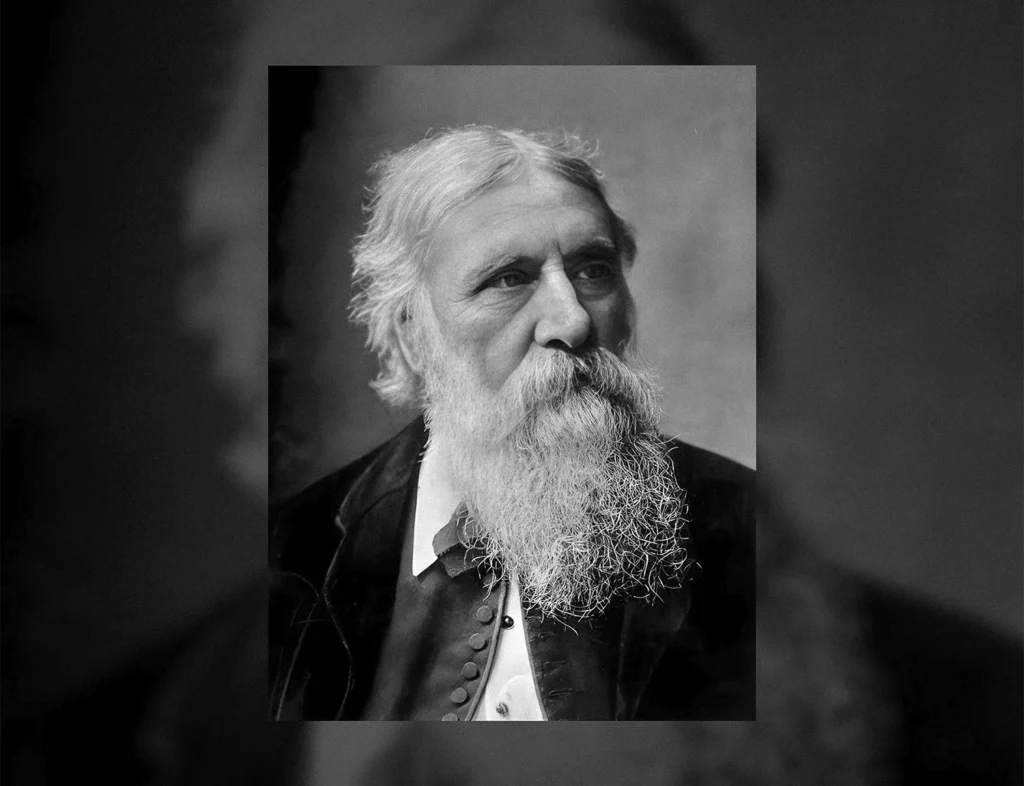
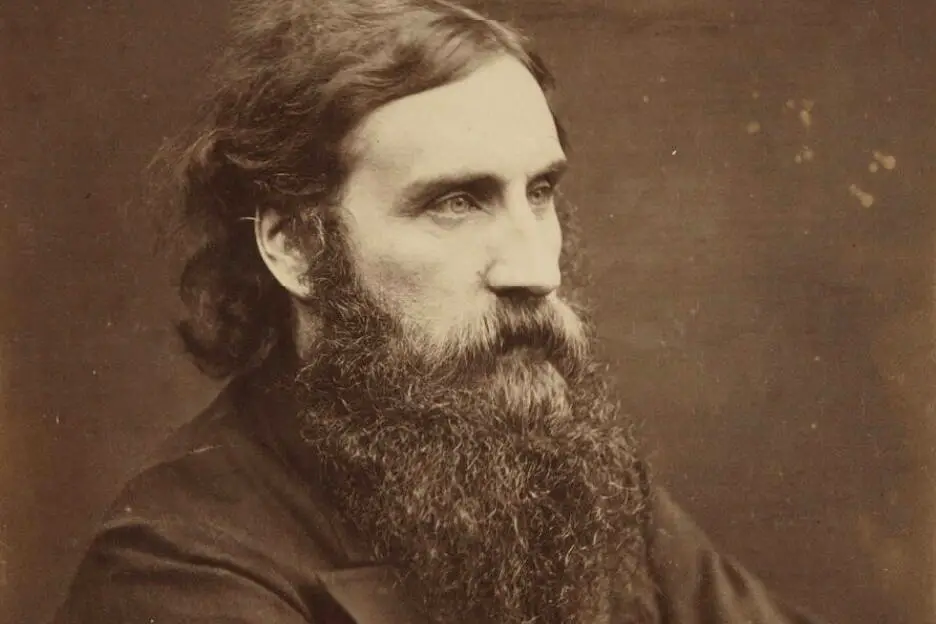
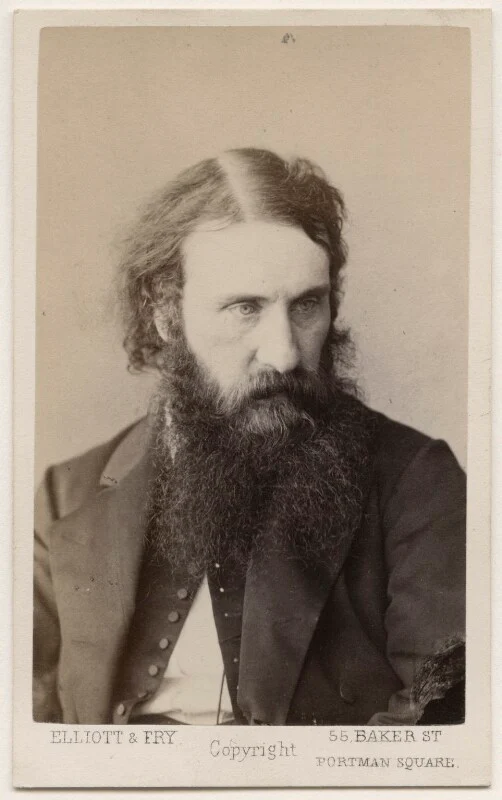
George MacDonald MacKay (Huntly, Escocia, 10 de diciembre de 1824-Ashtead, 18 de septiembre de 1905). Poeta, escritor y ministro cristiano escocés. Sus obras fueron inspiración para autores como Lewis Carroll, J. R. R. Tolkien, C. S. Lewis, Wystan Hugh Auden y Madeleine L’Engle. Está considerado, junto con Lewis Carroll, el escritor para niños de la época victoriana más relevante. Hoy, a pesar de ser considerado el «padre» de la literatura de fantastica, sigue siendo un gran desconocido.
Hijo de Helen MacKay y de George MacDonald, fabricante. Era una familia de grandes convicciones religiosas, seguidores de dos distintas iglesias locales. La pareja tuvo seis hijos. Cuando George tenia dos años se trasladó con su familia a una casa algo apartada, en la ribera del río, llamada The Farm, en la cual pasaría su infancia. Un hecho que sin duda marco la vida y seguramente la literatura de George fué la muerte de su madre cuando todavía era un niño.
En 1840 comenzó sus estudios en el King’s College de Aberdeen. En 1842 pasó varios meses en el norte de Escocia catalogando la biblioteca de una gran casa que nunca ha sido identificada. Posteriormente se fue a Londres a estudiar en el Highbury College del ministerio congregacional. Se graduó en 1845 con honores en Química y Física. Los tres años posteriores a su graduación fueron un periodo de intensa lucha interior. Mientras trabajaba como tutor privado, se vio envuelto en una crisis de vocación y fe, debatiéndose entre las exigencias del calvinismo en el que fue criado —con su énfasis en la predestinación y la depravación total— y una creciente intuición sobre la naturaleza del amor divino. Finalmente, en 1848, decidió seguir los pasos de su linaje y comenzó su entrenamiento teológico formal en el Highbury College de Londres.
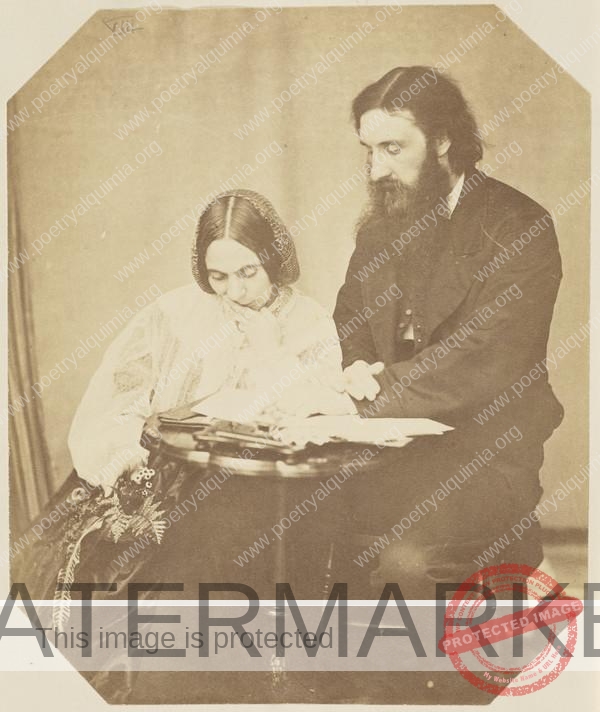
George y Louisa en 1863
En 1850 fue investido pastor de la Iglesia Congregacional de la Trinidad de Arundel(la Trinity Congregational Church de Arundel). MacDonald se casó con Louisa Powell en Hackney en 1851, con quien tuvo una familia de once hijos. Louisa, según las palabras de George, fue lo mejor que pasó en su vida. Mantuvieron correspondencia durante largo tiempo antes de casarse y Louisa le escribe en una de sus cartas: ′Sigue contándome todo lo que veas a tu alrededor, donde resplandece el rostro de la naturaleza. Háblame también del interior de tu alma, ese mundo vivo, sin cuya existencia el de fuera resultaría anémico′.
En sus sermones predicaba sobre el amor universal de Dios y la posibilidad de que nadie pudiera, en última instancia, dejar de unirse con Dios, lo cual no fue bien recibido y en 1852 tuvo problemas con los “diáconos”. Para la ortodoxia de su tiempo, estos planteamientos eran peligrosos. Los diáconos emprendieron un rodeo para librarse de él: redujeron su salario —que había sido de 150 libras anuales—bajo el pretexto de que su predicación no alimentaba espiritualmente a la congregación, con la esperanza de que aquello le induciría a renunciar. Pero no habían calibrado bien a su hombre. MacDonald se limitó a replicar que, pese a que fueran muy malas noticias para él, suponía que debía intentar vivir con menos. Y durante un tiempo así lo hizo, a menudo con la ayuda de lo que le ofrecían sus parroquianos más pobres, que no compartían la postura de los —más pudientes— diáconos. En 1853, no obstante, la situación devino insostenible y George dimitió. Al quedarse sin púlpito y con una familia que alimentar, se vio obligado a buscar una nueva forma de comunicar estas verdades y se consagró a la carrera de profesor y tutor, predicando ocasionalmente, escribiendo y asumiendo “trabajos peculiares” que seguiría realizando casi hasta el final. Fue así como el pastor expulsado de las iglesias comenzó a encontrar su voz en la literatura, convirtiendo la ficción en un vehículo de su ministerio.
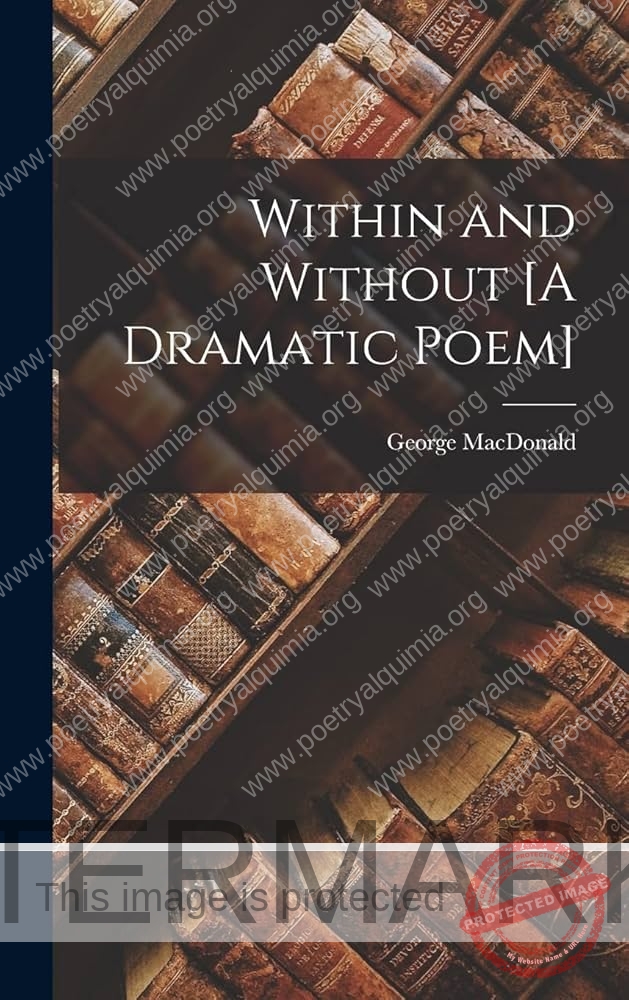
En octubre de 1856, la familia MacDonald viajó a Argel. La visita se realizó por motivos de salud —George MacDonald padecía afecciones bronquiales— y fue posible gracias a la generosidad de Lady Byron, quien había quedado muy impresionada por el primer libro publicado de MacDonald, «Within and Without», un drama en verso blanco que apareció en 1855. A su regreso en abril de 1857, la familia se mudó a Hastings y se instaló en una casa en el entonces poco elegante barrio de Tackleway, cerca de All Saints. Un visitante dejó constancia de cómo era la casa de los MacDonald en aquella época:
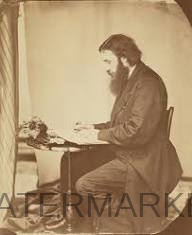
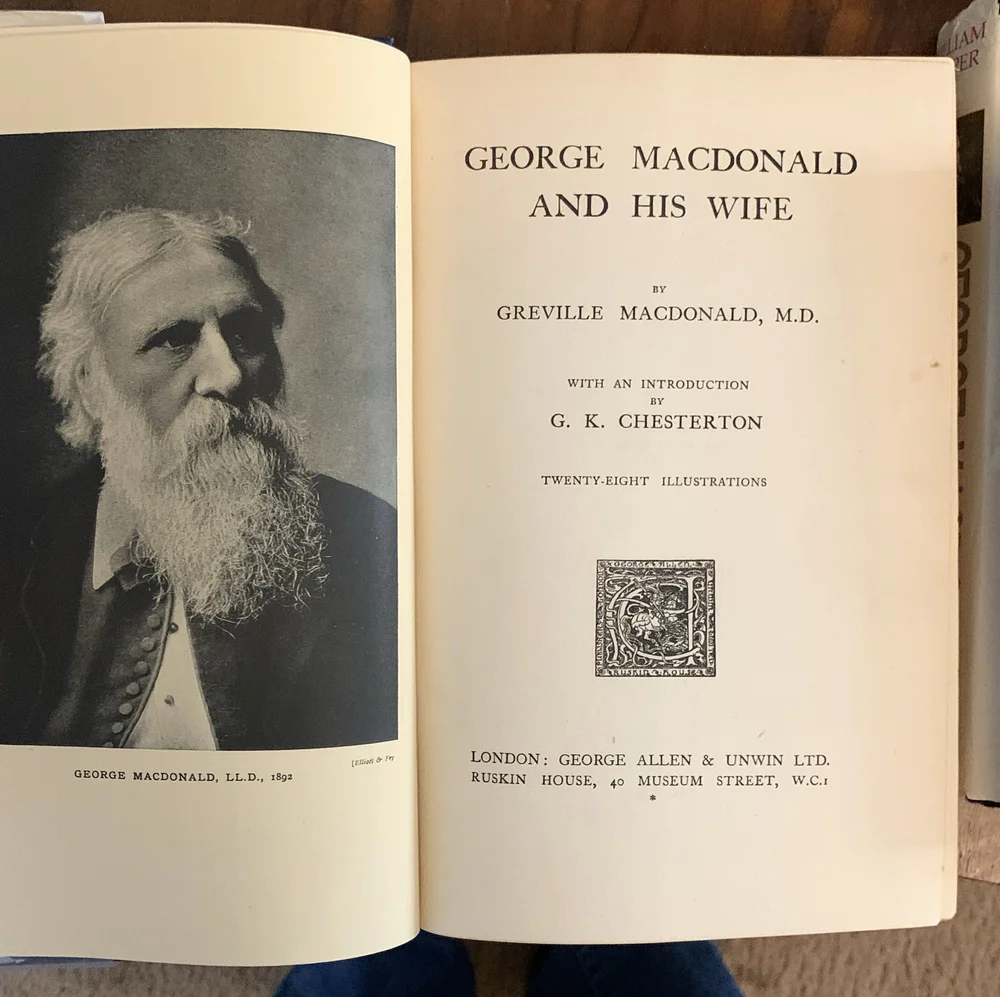
«Fui recibido con gran amabilidad por un joven extraordinariamente apuesto y una señora muy amable, que me hicieron sentir como en casa al instante. Había cinco niños en aquel entonces, todos muy bien educados y que se movían por la casa sin molestar a nadie. Al conocer mejor a la familia, me impresionó mucho la forma en que llevaban sus vidas. A cierta hora de la tarde, al subir al salón, se veían en el suelo varios bultos, ¡cada uno con un niño dentro! Al hablarles, respondían con tanta alegría y tranquilidad: «Estamos descansando», que la intrusa sentía que debía desaparecer de inmediato. La niñera estaba con ellos. Una sola palabra del padre o de la madre bastaba para llamar su atención al instante… Por las noches, cuando los niños ya estaban acostados, el señor MacDonald seguía escribiendo en su estudio —«Phantastes»— y la señora MacDonald bajaba a sentarse con su marido, quien le leía lo que había escrito; y yo los oía comentarlo al regresar al salón. Escucharlo leer «Saul» de Browning con su gracia y admirable dominio es algo que jamás olvidaré. La energía y el coraje de la Sra. MacDonald eran incansables, y sus capacidades, extraordinarias». (GMD y esposa, pág. 289).
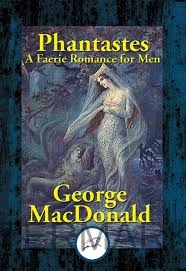
En 1858, MacDonald publicó su primera novela fantástica, Phantastes: una especie de romance para hombres y mujeres. La novela poseía una narrativa mítica que exploraba las grietas de la condición espiritual humana. Combinando la herencia de los cuentos celtas de su infancia con una profunda introspección teológica, MacDonald demostró que la fantasía no era una vía de escape de la realidad, sino un espejo para comprenderla mejor. Esta obra fué absolutamente rompedora para su época
George MacDonald fue uno de los mentores de Lewis Carroll (seudónimo del reverendo Charles Lutwidge Dodgson) y gracias al consejo de MacDonald, y la entusiasta recepción que tuvo el manuscrito titulado entonces «Las aventuras de Alicia bajo tierra», entre los hijos de MacDonald, el tímido Carroll se animó para publicar Las aventuras de Alicia en el país de las maravillas donde le rendiría agradecido homenaje a la familia MacDonald: el gato «Snowball» en el libro está nombrado en honor a la gatita de Mary MacDonald, la hija de George y el personaje de “Lily” fue nombrado en honor a Lilia, la hija mayor de George.
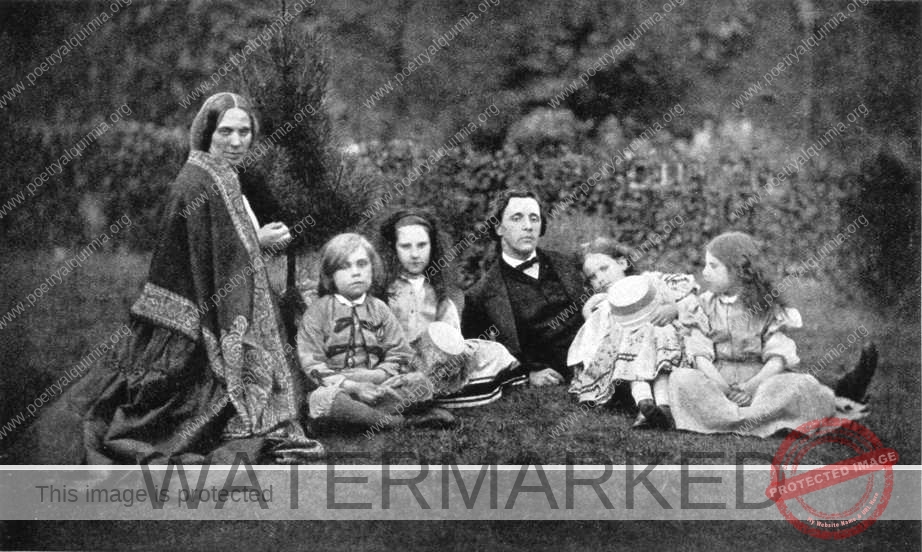
Lewis Carroll con Louisa la esposa de MacDonald y algunos de sus hijos
Ademas de se gran amigo de Lewis Carroll, MacDonald cultivó la amistad de otros famosos escritores contemporáneos como Charles Dickens, Wilkie Collins, Alfred Tennyson y Arthur Hugues, ilustrador de la mayor parte de sus obras, entre otros, a los que recibía en su casa de campo, El Retiro, en la que vivía con su esposa Louisa Powell y sus once hijos.
Mencion aparte merece la influencia de MacDonald sobre otro grande como fué C. S. Lewis. Aunque cuando murió MacDonald el gran Lewis era solo un niño, el rastro del escocés es omnipresente en la obra del creador de «Narnia».
En 1916 el joven C. S. Lewis de 17 años, en el andén de una estación de tren, casi por azar, adquirió un ejemplar de «Phantastes«. Décadas más tarde, Lewis recordaría aquel momento como un punto de inflexión en su vida:
«Debe hacer más de 30 años que compré —casi sin querer, pues había ojeado el volumen en aquel puesto de libros y lo había rechazado una docena de veces con anterioridad— la edición Everyman de Phantastes. Unas horas más tarde, supe que había traspasado una gran frontera. Ya me había sumergido hasta el cuello en el romanticismo; y con toda probabilidad, en cualquier momento me tropezaría con sus formas más oscuras y malignas, deslizándome por la empinada cuesta que lleva del gusto por lo insólito a la excentricidad y de ahí a la perversidad. Phantastes no dejaba de ser romántica de un modo completamente consciente; pero había una diferencia. Nada más lejos de mí por aquel entonces que el cristianismo, y por eso no pude entender entonces en qué consistía realmente tal diferencia». “Lo que logró hacer este libro fue convertirme, incluso bautizar mi imaginación”.
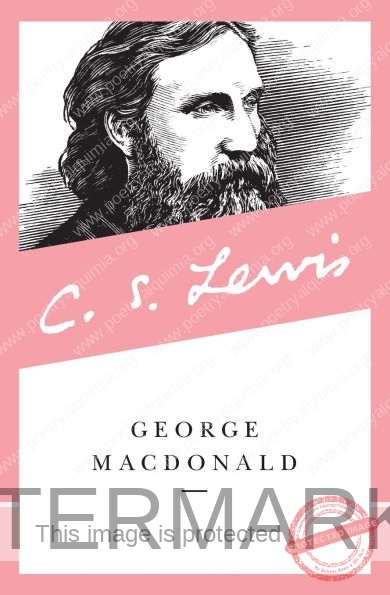
MacDonald le enseñó a Lewis que la fantasía , ademas de usarse para contar historias a los niños podía ser un vehículo para la verdad. La lealtad de Lewis hacia su nuevo “maestro” fue absoluta. Cuando años después Lewis publicó una antología de citas de MacDonald, para dar a conocer la obra de su maestro, Lewis describió así en el prologo su sentir:
«…hacer esta selección ha sido mi modo de pagar una deuda de justicia. Nunca he ocultado que le veía como a un maestro; de hecho, me imagino que no he escrito ni un solo libro en el que no le haya citado. Pero no me ha parecido que quienes han recibido amablemente mis libros sepan suficientemente, incluso ahora, hasta dónde llega esa afiliación…». Fuente
Y continua Lewis:
«…La mayoría de los mitos fueron forjados en tiempos prehistóricos, y ningún individuo los alumbró conscientemente. Pero de vez en cuando surge un genio en los tiempos modernos —un Kafka o un Novalis— que es capaz de enhebrar una historia así. MacDonald es el mayor genio de este tipo que conozco. Pero soy incapaz de clasificar dicho genio. Llamarlo genio literario parece insatisfactorio desde el momento en que puede coexistir con una notoria inferioridad en el arte de la palabra, o, dicho de otro modo, puesto que su conexión con las palabras asemeja ser completamente externa, y, en cierto sentido, accidental. Tampoco puede encajarse en ninguna de las otras artes. Empieza a parecer como si fuese un arte, o un don, que la crítica hubiese ignorado en gran parte. Puede incluso que sea una de las mayores artes, ya que produce obras que nos proporcionan (en el primer encuentro) tanto placer y (gracias a una familiaridad prolongada) tanta sabiduría y fuerza como las obras de los más grandes poetas. Es un arte en más de un sentido más emparentado con la música que con la poesía, o al menos con la mayor parte de esta. Va más allá de la expresión de aquello que ya hemos sentido. Hace brotar en nosotros sensaciones que nunca antes tuvimos, que nunca sospechamos que tendríamos, como si nos hubiésemos evadido de nuestro modo normal de conciencia para «experimentar deleites que no nos fueron prometidos al nacer». Se introducen bajo nuestra piel, nos impactan a un nivel más profundo que el de nuestros pensamientos y hasta que el de nuestras pasiones, trastorna viejas certezas hasta que todas las cuestiones se reabren, y en general, nos conmocionan y nos dejan más despiertos de lo que nunca lo habíamos estado…». Fuente
En su obra El gran divorcio, que narra un viaje imaginario en autobús desde el infierno hacia las fronteras del cielo, Lewis introduce a George MacDonald como un personaje central. Su “maestro” aparece allí como un espíritu inmenso y poderoso que es el guía que conduce al narrador a través de los misterios del más allá. Es el instructor que explica las complejidades de la moral cristiana y la naturaleza de la elección humana.
«Nunca he ocultado el hecho de contemplar [a George MacDonald] como mi maestro… la cualidad que me encanta de sus obras imaginativas resultó ser la cualidad del universo real, la divina, mágica, terrorífica y extática realidad en la que vivimos todos.» C. S. Lewis
Ademas de C.S.Lewis y de Lewis Carroll también fueron grandes admiradores de George MacDonald G. K. Chesterton, J. R. R. Tolkien, Elizabeth Yates, Neil Gaiman y Walt Whitman, entre otros.
George viajó varias veces a los Estados Unidos, donde sus visitas despertaban un gran fervor entre los admiradores de su obra, entre ellos el escritor Mark Twain, con el que entabló una entrañable amistad.
En 1877 los MacDonald se fueron a vivir a Italia. Durante los doce años siguientes la muerte de cuatro de los hijos Mary, Maurice, Caroline y Lilia fué la terrible realidad que les tocó vivir.
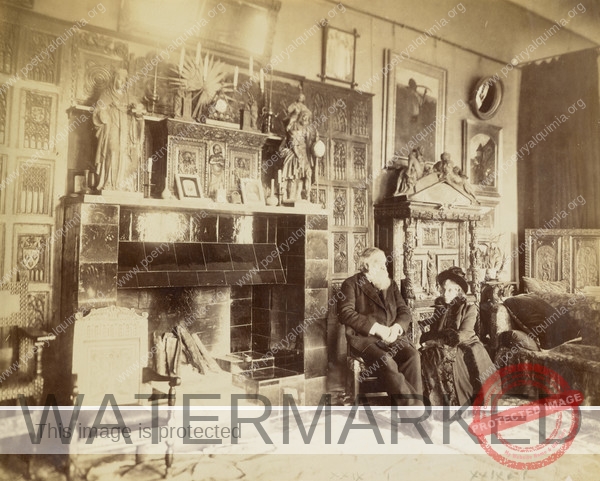
En 1900 los MacDonal se mudaron a St George’s Wood, Haslemere, a una casa diseñada por su hijo Robert Falconer MacDonald y construida por su hijo mayor, Greville MacDonald.
George MacDonald murió en 1905. Poco antes de cumplir 81 años. Fue enterrado junto a su querida esposa Louise (fallecida en 1902) en el cementerio de Aberdeen, donde una estatua le rinde homenaje.
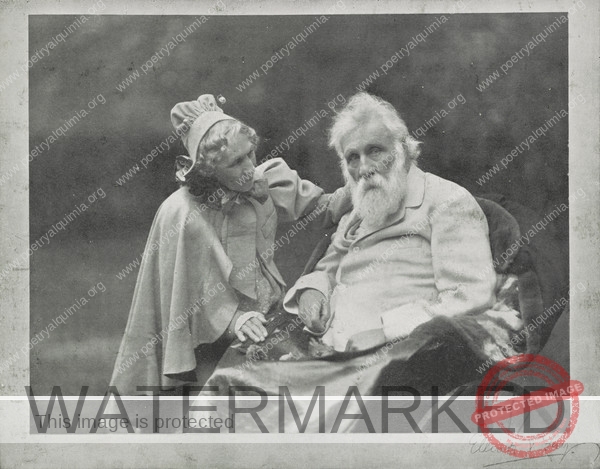
Su hijo Greville se convirtió en un médico que también escribió varios cuentos infantiles. Greville se aseguró de que varias ediciones nuevas de las obras de su padre fueran publicadas. Otro hijo suyo, Ronald MacDonald, también fue novelista. El hijo de Ronald, Philip MacDonald, (nieto de George) fue un conocido guionista de Hollywood.
Como señalamos anteriormente la primera publicación de MacDonald fué poesía: «Within and Without», un drama en verso blanco que apareció en 1855.
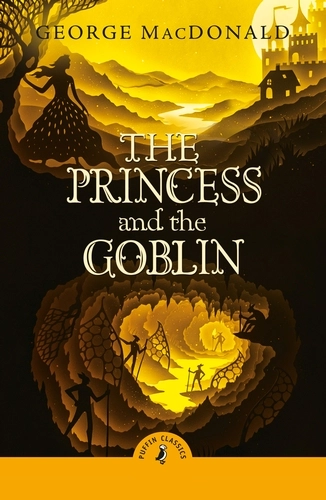
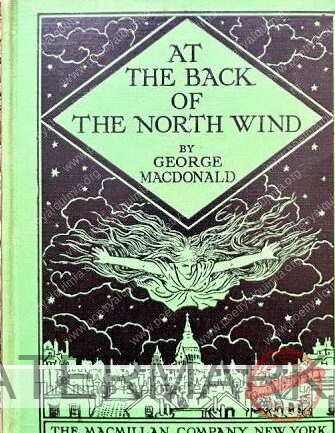
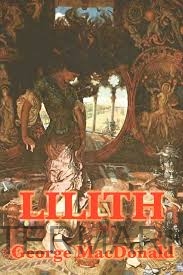
Sus obras literarias más conocidas son Fantastes, The princess and The Goblin, At the Back of the North Wind, y Lilith, todas novelas fantásticas, y cuentos de hadas como The Light Princess (La princesa ligera), The Golden Key, y The Lost Princess.
MacDonald también publicó algunos volúmenes de sus sermones como pastor.
El escritor G. K. Chesterton llamaría a MacDonal “el franciscano de Aberdeen”.
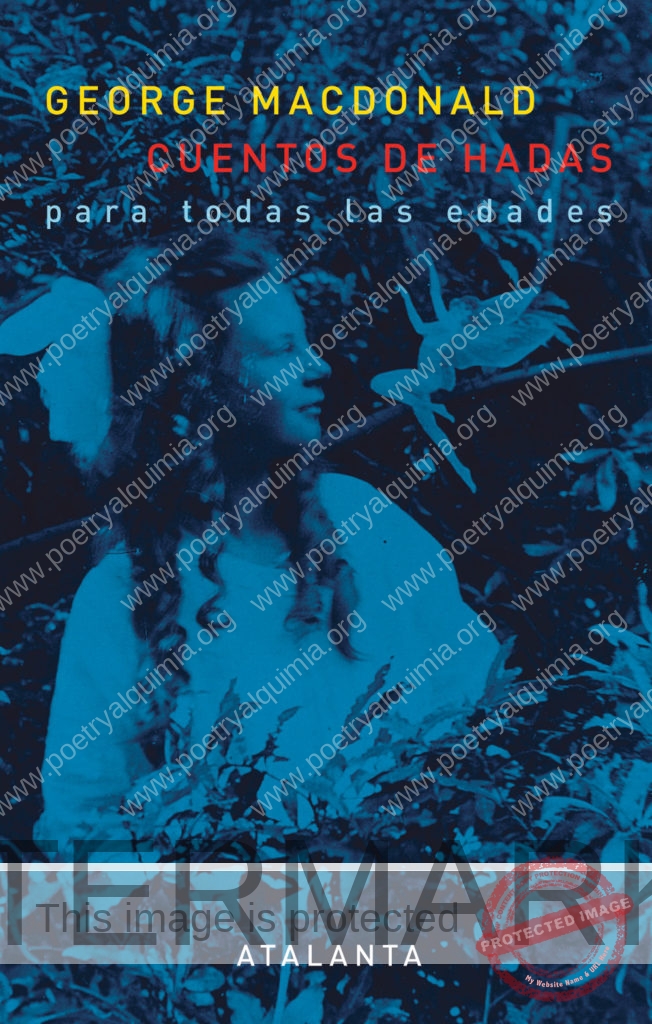
En España la editorial Atalanta ha publicado dos libros de George MacDonald dentro de su colección Ars Brevis: Cuentos de Hadas para todas las edades y Phantastes, a Fairie Romance for Men and Women.
«MacDonald es sobre todo un escritor mito-poético […] y uno de los escritores más relevantes del siglo XIX.»
W.H. AUDEN (poeta y ensayista)
«Nunca he ocultado el hecho de haber tenido a George MacDonald como mi maestro; en efecto, no imagino escribir un libro en el cual no haya una alusión a su obra.»
C. S. LEWIS
«MacDonald es como el abuelo de todos aquellos que luchamos por aceptar la realidad a través de nuestra imaginación.»
MADELEINE L’ENGLE (poeta y narradora)
En cierta ocasión MacDonald señaló:
«Escribo, no para niños, sino para los que son como niños, así tengan cinco, cincuenta y setenta y cinco años.»
Enlaces de interés :
https://digitalcommons.snc.edu/cgi/viewcontent.cgi?article=1000&context=northwind
https://books.google.com.cu/books?id=xmUVAAAAQAAJ&printsec=frontcover#v=onepage&q&f=false
Deja una respuesta