Another’s skin on the wound
because so much can be grafted though mostly
my own hip or back will do. If it’s really the body
and not metaphor, some expert in
cellular smarts could link-up those capillaries like
the guy on a chair at the basement power box knows
what’s what with wires
so the fridge will work again, and the stove,
and the lights when windows darken. The windows
did go dark. And I took my friend’s graft as gift: pictures
of the fire from her deck in Australia, sheet
after sheet of solid flaming red and black, sky
never like this to the south, her sickened pause for
photos to archive, document, as people say,
to round up the sum total, freeze, distance it for some point
called future: this nightmare really happened.
To frame and caption means the bloody bit might heal
in six weeks, a few years, a decade. A patient
opens her eyes post-surgery. Didn’t she just lie down
minutes ago after chatting with the doctor, his
last vacation to some island she never heard of?
She feigned interest. Now she’s here in this
cold room with parts of her missing.
I still imagine my friend sleeping. Trying to sleep. Fire
is a monster. No plot or plan, it never intends. So many creatures
in the bush or the city are shy and have no idea.
I don’t want to say which ones, even now. I want to hide them.
But it’s those who rarely make a sound that kept screaming.
The body
has its little hobbies. The lung
likes its air best after supper,
goes deeper there to trade up
for oxygen, give everything else
away. (And before supper, yes,
during too, but there’s
something about evening, that
slow breath of the day noticed: oh good,
still coming, still going … ) As for
bones—femur, spine,
the tribe of them in there—they harden
with use. The body would like
a small mile or two. Thank you.
It would like it on a bike
or a run. Or in the water. Blue.
And food. A habit that involves
a larger circumference where a garden’s
involved, beer is brewed, cows
wake the farmer with their fullness,
a field surrenders its wheat, and wheat
understands I will be crushed
into flour and starry-dust
the whole room, the baker
sweating, opening a window
to acknowledge such remarkable
confetti. And the brain,
locked in its strange
dual citizenship, idles there in the body,
neatly terraced and landscaped.
Or left to ruin, such a brain,
wild roses growing
next to the sea. The body is
gracious about that. Oh, their
scent sometimes. Their
tangle. In truth, in secret,
the first thing
in morning the eye longs to see.

Little Fugue
Everyone should have a little fugue, she says,
the young conductor
taking her younger charges through
the saddest of pieces, almost a dirge
written for unholy times, and no,
not for money.
Ready? she tells them, measuring out
each line for cello, viola, violin.
It will sound to you
not quite right. She means the aching half-step
of the minor key, no release
from it, that always-on-the-verge-of, that
repeat, repeat.
Everyone should have a little fugue-
I write that down like I cannot write
the larger griefs. For my part, I
believe her. Little fugue I wouldn’t
have to count.
Lent
The second week of Lent I walked
under crows fine in their
calamity, the wide dark wings, the heavy
rusted hinge in their throats.
I heard them once,
twice, too many times. They were a cloud
of bad hooks coming down, complaining.
The path lay ahead and went up,
mostly mud, but water
moved quick under ice, the sound
of anyone crying, then door after door
closing against it. So the light
gauzed over early, from 4 o’clock on.
Lent because of that, or because
of the branches, still spiny and bare.
Into the old leaves of summer I read
oak and black willow pressed
into the furrows, the half-frozen bootprints.
Lent because I kept walking, or because
I hadn’t slept.
Always, one is told things
after a death: the woods
will give way to a field, or grief
has its own sweetness, or
she will come to you in a dream
if you ask. But it was all thicket
where I walked, one woodpecker
circling and circling the same
dead tree, probing and listening.
He never left the high wood.
Finally is a word like stone, like
water. Or opening like water and closing
like stone. And finally the woods
opened to a field. I saw
a family there
before distance swallowed the,.
I saw their bright coats
get smaller, the children
lagging behind the mother
turning back to them and speaking.
It’s lent, I told myself, as if
this were a reason. For a long time
I watched for larks in the half-light
where tall grass
was bent and tousled like the hair
of a child after sleep.
Love is a wheel and a weight. Once
I slept perfectly, not knowing.
Even before the great burning
what of endangered koalas sleeping through it all
in eucalyptus trees, in this Sanctuary
therefore sanctified.
Koalas stink, oh, and in drought!
a New Zealander flat-out told me (can you trust a Kiwi
in Australia, an Aussie in New Zealand?)
Too little water up through roots into leaves which is
all they eat or drink. Worse, consider
the fires burning to ash one-metre-down microbes
that should offer all things to those koalas
straight out of earth via trees—
so the forester held forth.
If indigenous
(he was not), he’d say Country
like it’s the beginning of time, like it’s a thing.
Even you—YOU—could come back as dirt,
the Indigenous Elder told me. Even you could get lucky.
A most triumphant reverent re-up—dirt!—
all-giving link in the chain.
Koalas are cute, the Archangel said,
but their dreams scare me.
Merely human, I ran out of neck to bend back, tops of trees
lost in that eucalyptus grove.
Just once I spotted a koala high in—was it?—
a scribble gum.
Still, who was I to those giants? Couldn’t gauge
how high that leafing out was.
To know something though, a furry
small something, his back
to me, his ass to me, to be sweetly exact.
To see other life living
this life…
As for the scribble gum, its name
means larvae encrypting a feeding trail between
old bark and new, raised marks as
brilliant as Braille.
I mean to say, writes
the tiniest not-yet-moth,
want out want out want out—
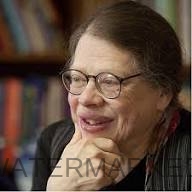
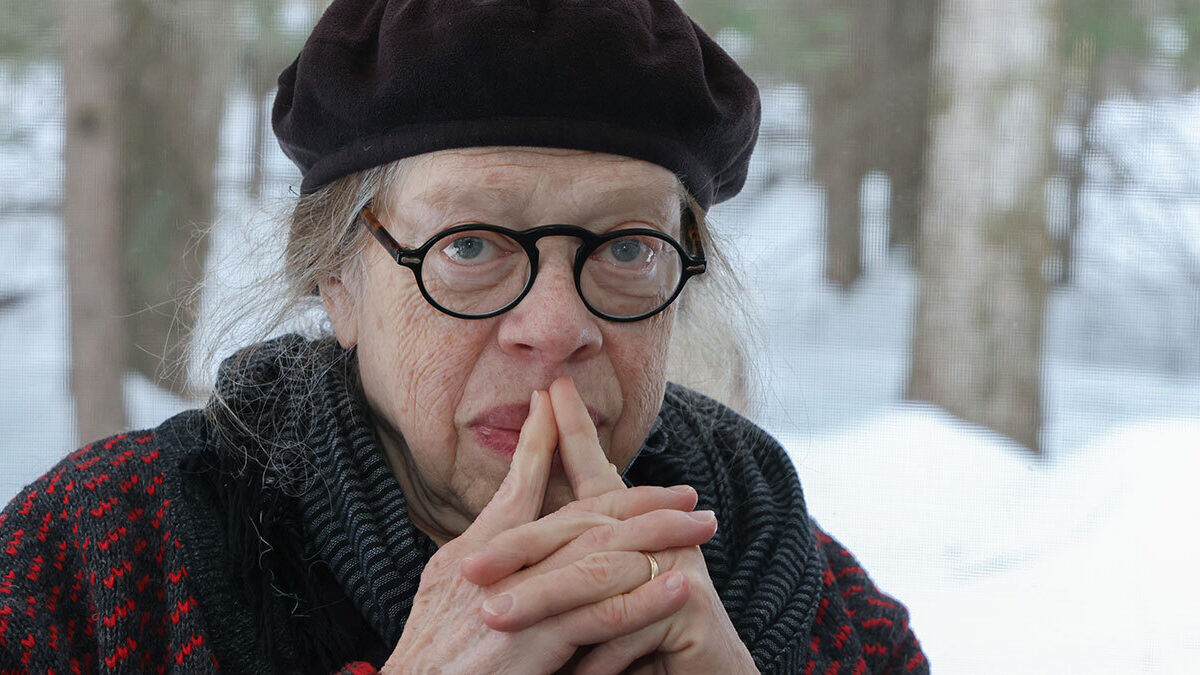
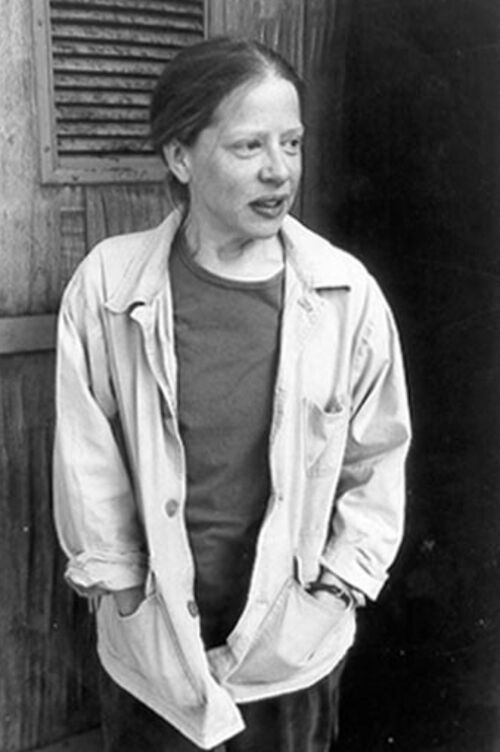
Marianne Boruch (Chicago, Illinois, Estados Unidos, 19 de junio de 1950). Poeta y ensayista.
Hija de Martha Taylor Boruch y Edward Boruch, tiene un hermano mayor, Michael Boruch, fotógrafo y profesor universitario de fotografía. Su madre fue ama de casa hasta 1973, cuando se convirtió en agente de viajes. Falleció en 2003. Edward Boruch (1922-1986) era hijo de inmigrantes polacos católicos devotos. Su madre era campesina y su padre carpintero, originario de Cracovia. Llegaron a Ellis Island alrededor de 1912, pero se conocieron en Chicago. La madre de Marianne Boruch, originaria de Tuscola, Illinois, no era ni polaca ni católica, y tuvo que convertirse para casarse. Terminó siendo la feligresa más comprometida de la familia y la responsable de la educación católica de sus hijos.
Boruch estudió en la Universidad de Illinois en Urbana, donde se graduó en 1972. Entre su licenciatura y su traslado a Amherst y la Universidad de Massachusetts para cursar su maestría en Bellas Artes (MFA), desempeñó diversos trabajos.
Se casó con David L. Dunlap en agosto de 1976. Su hijo, Will N. Dunlap, nació el 1 de abril de 1983. En Amherst, estudió con los poetas James Tate y Joseph Langland, y completó su MFA en 1979.
Ha impartido clases en la Universidad de Tunghai en Taiwán, la Universidad de Wisconsin y la Universidad de Maine en Farmington, pero la mayor parte de su trayectoria profesional la ha desarrollado en la Universidad de Purdue.
Profesora de inglés en Purdue, Boruch también imparte clases en el programa de MFA Warren Wilson. En Purdue, recibió el Premio a la Excelencia Docente en 1991 y nuevamente en 2004.
Tras jubilarse de la Universidad de Purdue en 2018, Boruch continúa impartiendo clases en el Programa para Escritores del Warren Wilson College.
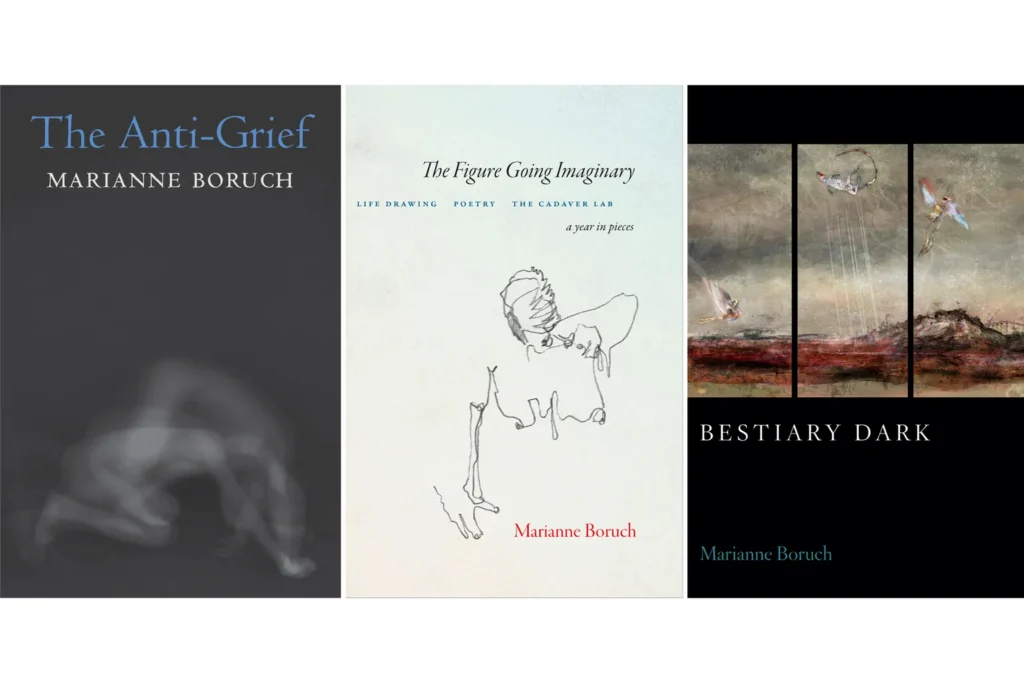
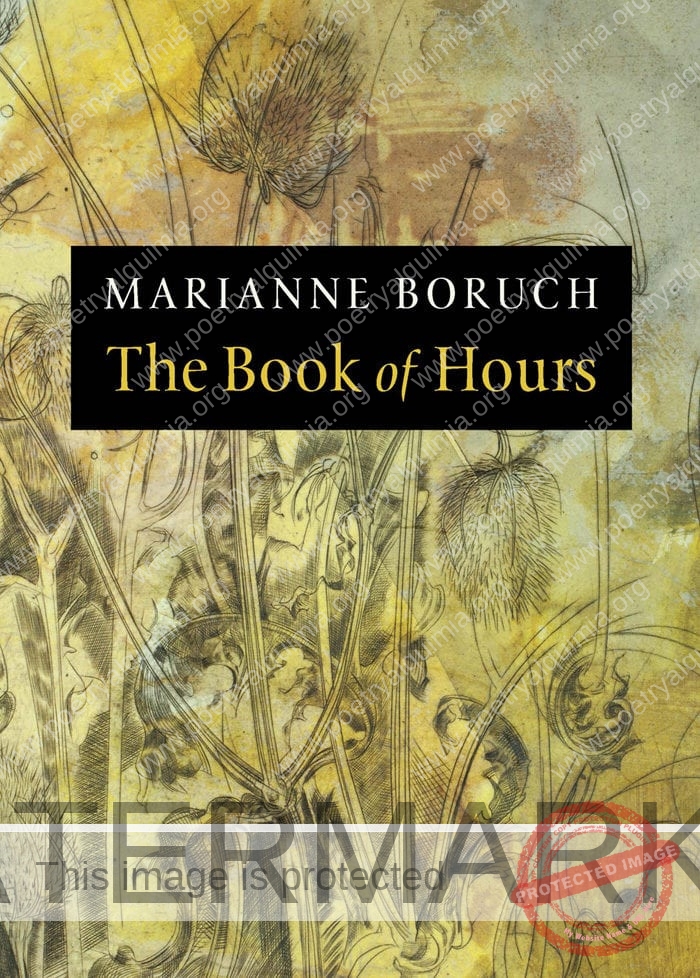
Ha publicado mas de diez libros de poesía que incluyen Bestiary Dark (2021), The Anti-Grief (Copper Canyon, 2019), Eventually One Dreams the Real Thing (2016), Cadaver, Speak (2014), The Book of Hours (2011) de Copper Canyon Press, Grace, Fallen (Wesleyan University Press, 2008) y Poems: New & Selected (Oberlin College Press, 2004).
Ha publicado tres colecciones de ensayos sobre poesía: Poetry’s Old Air (University of Michigan Press, 1995), In the Blue Pharmacy (2005) y The Little Death of Self (Michigan, 2017). Sus numerosos ensayos sobre poesía y poetas se publicaron primero en diversas revistas literarias y luego en Poetry’s Old Air. Considera que escribir ensayos es similar a escribir poemas.
También ha publicado unas memorias, The Glimpse Traveler (Indiana, 2011) sobre viajar a dedo a principios de los 70.
Entre sus reconocimientos se encuentran: el Premio de Poesía Kingsley-Tufts y becas/residencias de la Fundación Guggenheim, dos becas de poesía de la Fundación Nacional para las Artes (National Endowment for the Arts), el Centro Bellagio de la Fundación Rockefeller, premios Pushcart, una cátedra visitante Fulbright en la Universidad de Edimburgo en 2012 y una beca Fulbright sénior en el Instituto Internacional de Estudios Poéticos de la Universidad de Canberra en 2019. Ha sido artista invitada en la Academia Americana en Roma y en dos parques nacionales: Isle Royale y Denali. En 2022 recibió la beca Jennifer Jahrling Foresee de escritora residente en el Colby College.
Su ultimo galardón ha sido ganar el Premio de Poesía Jackson 2026 dotado con $100,000 por su «talento excepcional». El jurado ha elogiado el genio humano en la era de la IA.
«Marianne Boruch ilumina la amplitud y el alcance del pensamiento humano» «En una era de inteligencia artificial, Boruch se propone sacudir la totalidad de nuestro conocimiento colectivo, donde el alma, como sugiere en varios poemas, es una inmensidad de anhelos y curiosidad ilimitada».
Su obra ha aparecido en The New Yorker, The Nation, Field, American Poetry Review, POETRY, The New England Review, Field, New York Review of Books, London Review of Books, Kenyon Review, Volt y otras publicaciones. En 2019, durante una beca Fulbright de investigación sénior en Australia, observó la asombrosa fauna de ese país para escribir Dark Bestiario, publicado por Copper Canyon Press (2021).
La poesía de Boruch invita a ser leída repetidamente, sobre todo por su inventiva en el lenguaje y las imágenes. Sin embargo, no es fácil de leer, y el lector debe estar atento a los cambios sintácticos y la ambigüedad resultante. Boruch puede abordar casi cualquier tema y darle un giro inusual, desde su abuelo hasta tocar el violonchelo.
Según el critico literario y autor Brooke Horvath » todos los poemas de Boruch se caracterizan por «una especie de extrañamiento de algo… que damos por sentado que conocemos a la perfección, pero que de repente —a través de las metáforas, las conexiones inesperadas y las palabras descriptivas…— nos introduce en el misterio».
Enlaces de interés :
https://www.valpo.edu/vpr/keyesessayboruch.html
https://ias.ceu.edu/marianne-boruch


Les agradezco con todo mi ser ya que lo alimentan todos los dias.
Magnífica poeta. Gracias por darla a conocer.
¡Muchas gracias a Ud.por su comentario y por leer nuestra página!