Hope
What wilt thou do when faith is fled
And hope is dead
And love’s wing broken?
Wilt thou lie in the grave of the past and sleep,
While the mourners weep
And sad rites are spoken?
Nay, nay—fare forth, though the night be black
And the storm’s red rack
In the sky is burning;
For the sun shines somewhere, from gloom released,
And the heart of the east
For the day is yearning.
De:Valeria and other poems. (Chicago: A.C. McClurg & Company, 1892)

Love Song
More lovely is my love
Than yonder dove
Who flies so free.
Her voice is sweeter far
Than larks’ notes are.
Ah, dear is she.
She sitteth in the sun,
And every one
Smiles up to God—
As when a lily rare
Springeth for prayer
Out of the sod.
Her hair enweaves the light
In woof as bright
As saints’ brows wear.
Her soul through morning eyes
Explores the skies,
For truth is there.
Blest with glad thoughts, she waits
At life’s swung gates
The call of love—
God’s love or man’s—ah me!
How white is she—
My flower, my dove!
How white is she! O heart,
Craven thou art.
Hark thee— be stilled!
The highest ranks of heaven—
God’s circles seven—
Christ’s love hath filled.
God hath no need of her;
She does not stir
When wide skies shine.
She lives for love. Awhile
Her solemn smile
Is ours— is mine!
De: Valeria and other poems (Chicago : A.C. McClurg & Company, 1892)
Shadows
What is most near?
Ah, sweet dead year-
Thy fallen leaf
And gathered sheaf,
The presence that is fled,
The vows that once were said-
These are most near.
Swift speeds away
Rose-crowned To-day.
So far, so far
Her light feet are!
I look and see thy face
Haunting the upland place,
Dear Yesterday.
The blooming flowers,
The sunny hours-
These cannot rest,
These are half blest.
But thou forevermore
Art mine, love, as of yore,
And time is ours.
De: Valeria and other poems (Chicago : A.C. McClurg & Company, 1892)
From the «Commemoration Ode»
WASHINGTON
WHEN dreaming kings, at odds with swift paced time,
Would strike that banner down,
A nobler knight than ever writ or rhyme
With fame’s bright wreath did crown
Through armed hosts bore it till it floated high
Beyond the clouds, a light that cannot die!
Ah, hero of our younger race!
Great builder of a temple new!
Ruler, who sought no lordly place!
Warrior, who sheathed the sword he drew!
Lover of men, who saw afar
A world unmarred by want or war,
Who knew the path, and yet forbore
To tread, till all men should implore;
Who saw the light, and led the way
Where the gray would might greet the day;
Father and leader, prophet sure,
Whose will in vast works shall endure,
How shall we praise him on this day of days,
Great son of fame who has no need of praise?
How shall we praise him? Open wide the doors
Of the fair temple whose broad base he laid.
Through its white halls a shadowy cavalcade
Of heroes moves o’er unresounding floors-
Men whose brawned arms upraised these columns high,
And reared the towers that vanish in the sky,-
The strong who, having wrought, can never die.
LINCOLN
AND, lo! leading a blessed host comes one
Who held a warring nation in his heart;
Who knew love’s agony, but had no part
In love’s delight; whose mightly task was done
Through blood and tears that we might walk in joy,
And this day’s rapture own no sad alloy.
Around him heirs of bliss, whose bright brows wear
Palm-leaves amid their laurels ever fair.
Gaily they come, as though the drum
Beat out the call their glad hearts knew so well:
Brothers once more, dear as of yore,
Who in a noble conflict nobly fell.
Their blood washed pure you banner in the sky,
And quenched the brands laid ‘neath these arches high-
The brave who, having fought, can never die.
Then surging through the vastness rise once more
The aureoled heirs of light, who onward bore
Through darksome times and trackless realms of ruth
The flag of beauty and the torch of truth.
They tore the mask from the foul face of wrong;
Even to God’s mysteries they dared aspire;
High in the choir they built yon altar-fire,
And filled these aisles with color and with song:
The ever-young, the unfallen, wreathing for time
Fresh garlands of the seeming-vanished years;
Faces long luminous, remote, sublime,
And shining brows still dewy with our tears.
Back with the old glad smile comes one we knew-
We bade him rear our house of joy today.
But Beauty opened wide her starry way,
And he passed on. Bright champions of the true,
Soldiers of peace, seers, singers ever blest,-
From the wide ether of a loftier quest
Their winged souls throng our rites to glorify,-
The wise who, having known, can never die.
DEMOCRACY
FOR, lo! the living God doth bare his arm.
No more he makes his house of clouds and gloom.
Lightly the shuttles move within his loom;
Unveiled his thunder leaps to meet the storm.
From God’s right hand man takes the powers that sway
A universe of stars.
He bows them down; he bids them go or stay;
He tames them for his wars.
He scans the burning paces of the sun,
And names the invisible orbs whose courses run
Through the dim deeps of space.
He sees in dew upon a rose impearled
The swarming legions of a monad world
Begin life’s upward race.
Voices of hope he hears
Long dumb to his despair,
And dreams of golden years
Meet for a world so fair.
For now Democracy doth wake and rise
From the sweet sloth of youth.
By storms made strong, by many dreams made wise,
He clasps the hand of Truth.
Through the armed nations lies his path of peace,
The open book of knowledge in his hand.
Food to the starving, to the oppressed release,
And love to all he bears from land to land.
Before his march the barriers fall,
The laws grow gentle at his call.
His glowing breath blows far away
The fogs that veil the coming day,-
That wondrous day
When earth shall sing as through the blue she rolls
Laden with joy for all her thronging souls.
Then shall want’s call to sin resound no more
Across her teeming fields. And pain shall sleep,
Soothed by brave science with her magic lore;
And war no more shall bid the nations weep.
Then the worn chains shall slip from man’s desire,
And ever higher and higher
His swift foot shall aspire;
Still deeper and more deep
His soul its watch shall keep,
Till love shall make the world a holy place,
Where knowledge dare unveil God’s very face.
Not yet the angels hear life’s last sweet song.
Music unutterably pure and strong
From earth shall rise to haunt the peopled skies,
When the long march of time,
Patient in birth and death, in growth and blight,
Shall lead man up through happy realms of light
Unto his goal sublime.
Deserted
O Love, my love, it’s over then-
Your heart flies free;
And it’s now no more us two again,
The door on you and me.
And it’s now no more the supper spread,
The stove singing low.
Oh, worlds away your feet are led,
Where wild winds blow!
Oh, seas between and worlds away
Our paths run now.
Go, for more dead than coffined clay
Is love’s dead vow.
Go, may your bread be sweet, your rest
As soft and deep be
As when you slept upon my breast
And gave the world for me.
Go, for my heart cries out with pain,
With joy cries out.
Go ! you’ve unwound the golden chain-
Love’s hope, love’s doubt.
Go! you were mine-now mine shall be
The whole brave world.
My spirit flutters and is free,
With wings unfurled.
Out of my little house of bliss,
O lost love sweet,
Out of my grief and loneliness
Now will I rise to greet
My friend who begs in the street below,
My friend who prays above;
And each will be-oh, well I know!-
You-you, lost love.
A Story
He loved her and he was untrue-
Untrue he was, let loved her still;
For out of nether darkness drew
The winds that lashed his wandering will.
She lived in joy all unaware,
In pain and joy his children bore,
While hidden spectres of despair
Drove him to love her more and more.
And when she knew the truth at last,
Suddenly she grew still and strange.
Her rag of haggard youth was cast
Upon the evil winds of change.
She heard, and could not understand;
She paled, and could not bloom again.
So bland death took her by the hand,
Looked in her eyes and made all plain,
Yes, wise death taught her all, and so,
Smiling once more, she kissed and passed.
And he, caught in life’s overthrow,
Faced love and death alone at last.
At last, made strong by love and death,
He gave her truth for truth, and knew
Now she had won his perfect faith.
Dying, she doomed him to be true.
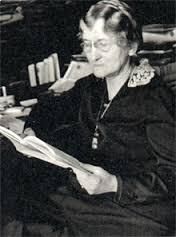
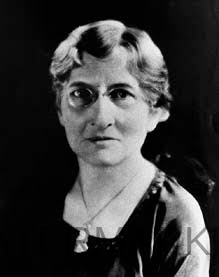
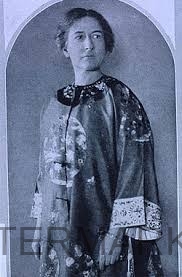
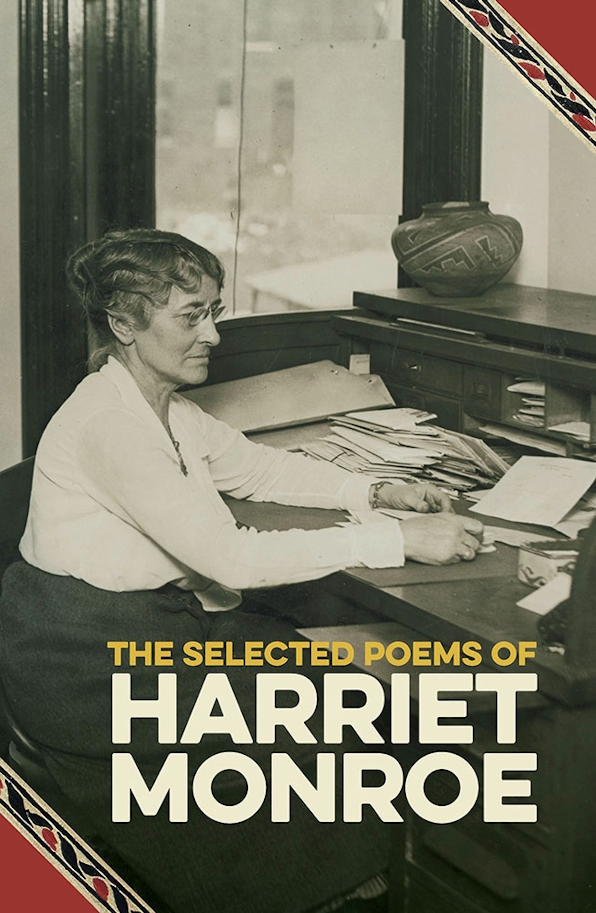
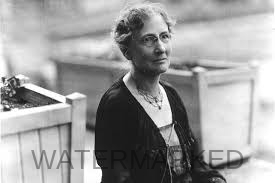
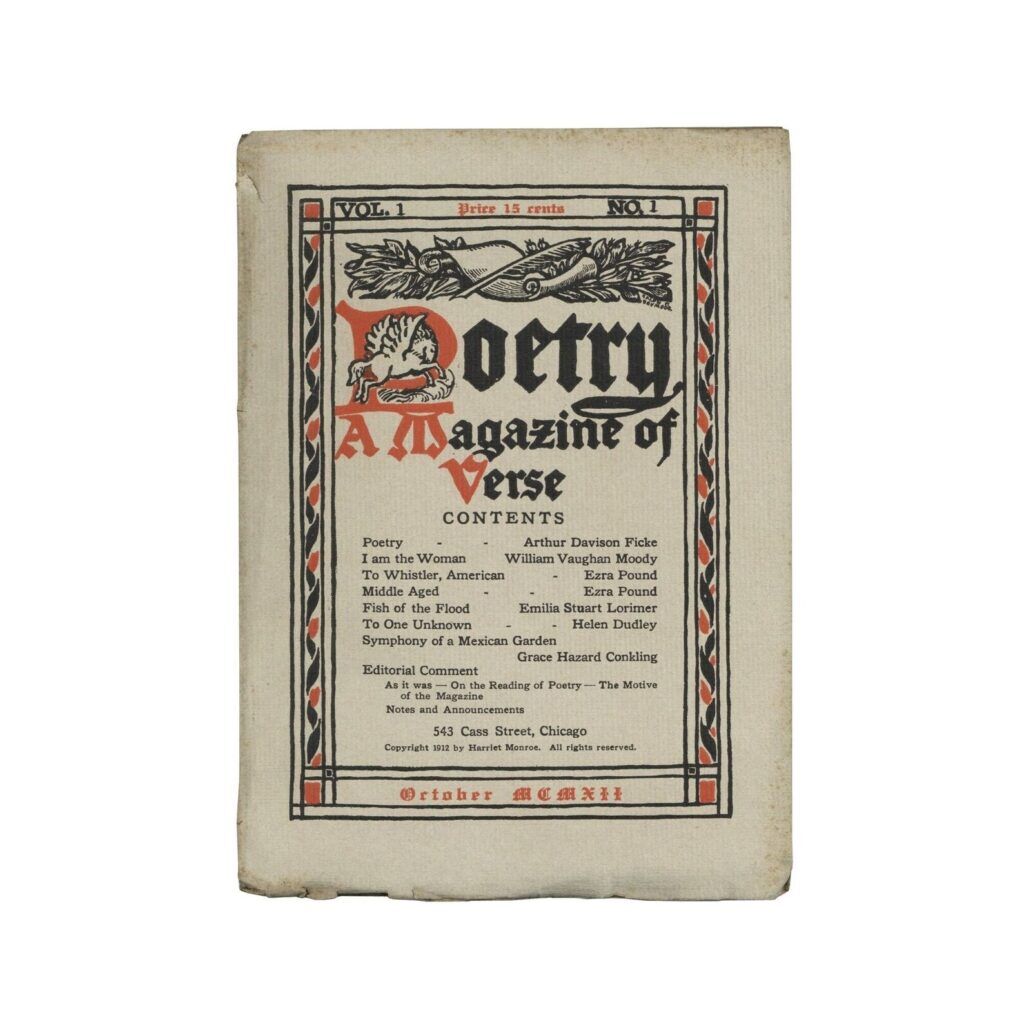
Harriet Monroe (Chicago, Estados Unidos, 23 de diciembre de 1860 – 26 de septiembre de 1936) Poeta, editora, crítica de arte y mecenas, cuya aportación profesional se ha revelado fundamental para el desarrollo de la literatura del siglo XX. Destaca por la creación de la revista Poetry: A Magazine of Verse en la cual se dio voz a poetas tales como H.D., Ezra Pound, T.S. Eliot, William Carlos Williams o Carl Sandburg, entre otros. Gracias a ella, tomaron forma las nuevas corrientes literarias emergentes como los imaginistas y contribuyó de manera determinante la efervescencia cultural del país.
Harriet desarrolló su amor por la literatura desde niña. Hija de Marta Mitchell Monroe y de un padre abogado con una extensa biblioteca que era el refugio perfecto para una niña solitaria en un hogar marcado por la tensión parental y la rivalidad entre hermanos. En su autobiografía, La vida de una poeta: Setenta años en un mundo cambiante (Macmillan, 1938), publicada dos años después de su muerte, Monroe recordaba: «Comencé muy joven con Shakespeare, Byron, Shelley, Dickens y Thackeray; y la biblioteca, siempre repleta de libros, me brindó la seguridad de la compañía de gente animada e interesante, amigos del alma que aliviaron mi soledad».
Monroe continuó su formación en el seminario victoriano del Convento de la Visitación en Washington, D.C. Impulsada por el temor al anonimato póstumo, tras su graduación proclamó su determinación de convertirse en una poeta o dramaturga «grande y famosa».
Durante los siguientes 30 años, Monroe afrontó dificultades económicas en su búsqueda del arte. Disfrutó de algunos éxitos notables, pero tuvo que lidiar con duras realidades. Aunque la revista Century Magazine publicó su poema «With a Copy of Shelley» en 1889, pronto se desilusionó con los escasos ingresos que recibían los poetas. El comentario de Monroe: «El pintor o escultor menor era honrado con grandes premios anuales en nuestras ciudades más importantes, mientras que el poeta menor era objeto de burla para los columnistas, sujeto al prejuicio popular de que su arte prosperaba mejor en la miseria, recluido en una buhardilla».
Consolidando su reputación profesional como corresponsal independiente del Chicago Tribune y ampliando su círculo de conocidos literarios prominentes, Monroe recibió el encargo de escribir una oda conmemorativa para el 400 aniversario de la llegada de Colón a América. Trabajó en esta Oda Colombina durante dos años. Sarah Cowell Le Moyne recitó el poema en el Día de la Inauguración de la Exposición Universal y Colombina de Chicago ante 5000 asistentes. El compositor George Whitefield Chadwick le puso música a la oda y un coro de miles de personas la cantó, según los periódicos de la época. El poema también se vendió en folletos durante los seis meses que duró la feria, que tuvo un éxito arrollador; sin embargo, Monroe se quedó con varios miles de ejemplares sin vender. La Oda a las Islas Columbias no es muy recordada hoy en día, pero su impacto en la poesía estadounidense fue profundo. Fue el centro de un importante litigio que sentó un precedente en cuanto al control del autor sobre la publicación mediante los derechos de autor. El periódico neoyorquino The World publicó fragmentos de la oda sin el consentimiento de Monroe casi un mes antes de su debut en el Día de la Dedicación. Con la ayuda de su padre abogado de Chicago, Monroe interpuso una demanda por infracción de derechos de autor. Monroe ganó el juicio y el Tribunal de Apelaciones de Estados Unidos confirmó la sentencia; la Corte Suprema se negó a revisar el caso y obligó a The World a pagarle a Monroe 5000 dólares, dinero que utilizó para viajar por Europa. En su libro A Poet’s Life, Monroe escribió sobre el caso: «Así, mi pequeña demanda, al carecer de precedentes, sentó su propio precedente y se convirtió en un caso de estudio, definiendo los derechos de los autores a controlar sus obras inéditas».
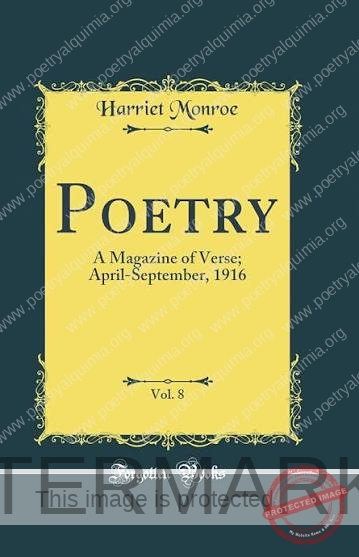
Los viajes de Monroe por Europa durante la década de 1890 influyeron en su poesía y en sus decisiones empresariales. Otro viaje alrededor del mundo en 1910 la convenció de la necesidad imperiosa de una plataforma para la publicación de poesía. Con la ayuda del editor Hobart Chatfield-Taylor, Monroe persuadió a cien destacados empresarios de Chicago para que patrocinaran su nueva revista, comprometiéndose a una suscripción anual de 50 dólares durante cinco años. Los 5000 dólares fueron suficientes para lanzar la revista Poetry el 23 de septiembre de 1912 y cumplir su promesa a los colaboradores de una remuneración adecuada por todas las obras publicadas.
Monroe fue editora de Poetry: A Magazine of Verse durante sus dos primeros años sin recibir salario, mientras trabajaba simultáneamente como crítica de arte para el Chicago Tribune. Además de dirigir la revista, Harriet, junto a la también poeta Alice Corbin Henderson, quien ocupó el lugar de ayudante de edición y publicó algunos de sus poemas en la revista, se ocupó en gran medida de la crítica literaria que aparecía entre sus páginas. Según Paterson, Monroe se sintió realizada cuando uno de sus colaboradores, Rabindranath Tagore, ganó el Premio Nobel de Literatura en 1913. Monroe dijo: «Respiré hondo, llena de energía renovada, y sentí que mi pequeña revista estaba cumpliendo algunas de nuestras esperanzas, aparentemente descabelladas».
Para 1914, el trabajo en la revista se le hizo demasiado exigente como para compaginarlo con sus otros empleos, así que renunció al Chicago Tribune y aceptó un salario de 50 dólares mensuales de la revista. Durante más de diez años, mantuvo ese modesto sueldo, que aumentó a 100 dólares mensuales en 1925; para entonces, la revista ya había publicado artículos de decenas de poetas de renombre mundial. El enfoque firme y meticuloso de Monroe en la edición se convirtió en su sello distintivo. Se esforzó por mantener la política de «puertas abiertas» y antepuso el arte y la integridad a sus gustos personales y a los de algunos colegas de opiniones firmes, incluido el corresponsal extranjero Ezra Pound. Su buen ojo para la calidad perdurable le facilitó evitar la trampa de las tendencias literarias y la seguridad de los estilos poéticos clásicos. En un ensayo de 1915 incluido en Poetry, Edgar Lee Masters escribió: «La señorita Monroe, tanto como editora como creadora, ha hecho tanto por el arte de la poesía, en sus diversas facetas de alentar a los principiantes y al dar un alto ejemplo en la producción poética, que cualquier volumen suyo merece atención». El ensayo de Donald Davidson de 1926 en el mismo volumen afirmaba: «[Monroe] ha prestado un gran servicio a la poesía estadounidense porque tuvo la visión de fundar su revista justo cuando más se necesitaba, y el valor de publicar a escritores que necesitaban darse a conocer al público. Ha defendido la poesía, ha dado conferencias sobre ella y ha intentado fomentar el respeto por ella».
Bajo la dirección de Monroe, Poetry se convirtió y se mantuvo como una revista de gran prestigio e influencia, sobreviviendo a una guerra mundial y a la Gran Depresión durante su gestión.
Monroe fue una poeta consagrada y publicó varios libros a lo largo de su vida, entre ellos Valeria: and Other Poems (1891, A.C. McClurg), The Passing Show: Five Modern Plays in Verse (1903, Houghton, Mifflin and Co.), Dance of the Seasons (1911, Ralph Fletcher Seymour Co.) y You and I (1914, The Macmillan Company).
En 1931, Monroe donó su biblioteca de poesía, sus documentos personales y los archivos editoriales de la revista Poetry a la Universidad de Chicago. Su correspondencia con poetas de principios del siglo XX ofrece una gran cantidad de información sobre sus ideas y motivaciones, así como sobre la historia de la literatura contemporánea.
Monroe fue editora de la revista Poetry hasta su muerte en 1936. Durante los últimos años de su vida, viajó extensamente al servicio de la literatura y la cultura literaria mundial. Tras asistir a la Asociación Internacional de Poetas, Ensayistas y Novelistas (PEN) en Buenos Aires, y estando de viaje en Perú sufrió una hemorragia cerebral.
Harriet Monroe murió el 26 de septiembre de 1936 y fue enterrada en Arequipa, Perú.
Monroe fue fundamental en el «renacimiento poético» de principios del siglo XX al gestionar un foro que brindó a poetas y a la poesía una plataforma para llegar a un público estadounidense más amplio. Mediante su política de «puertas abiertas», estableció una estrategia editorial independiente de las preferencias editoriales individuales o de los movimientos literarios.
Según Judith Paterson en una entrada del Dictionary of Literary Biography, el compromiso de Monroe con este enfoque garantizó el éxito de la revista: «La política de esta revista será la de puertas abiertas; ¡que el gran poeta que buscamos jamás la encuentre cerrada, o entreabierta, ante su inmenso genio! Con este fin, los editores… desean publicar la mejor poesía inglesa… que se escribe hoy, independientemente de dónde, por quién o bajo qué teoría artística esté escrita».
La revista Poetry: A Magazine of Verse, que fundó Monroe sigue publicándose en la actualidad a cargo de la fundación Poetry Fundation, teniendo gran notoriedad, tanto entre las publicaciones de habla inglesa como en el ámbito literario internacional, contando con hasta 100.000 suscriptores.
Nota: No hemos encontrado traducción fiable de los poemas de Monroe por lo cual todos están en su idioma original ,el ingles.
Enlaces de interés :
Fuente de la Bio: https://www.poetryfoundation.org/poets/harriet-monroe
https://www.poetryfoundation.org/poetrymagazine/browse?volume=35&issue=4&page=33
https://www.best-poems.net/harriet-monroe/poems.html



Como siempre impecables, FELICIDADES
¡Gracias!