30th Birthday
May I never be afraid
especially of myself
but
Muhammed Ali are you telling
the truth?
Well you’re being true aren’t you and
you talk so wonderfully in your body
that protects you with physique of voice
raps within dance
May I never be afraid
rocked and quaked
the mantilla is lace
whose black is oak
But if I’m dark I’m strong
as my own darkness
my strength the universe
whose blackness is air
only starry
lace
But if I’m alive I’m strong
as life
Strong as the violets
in Marlon Brando’s fist
his dissemblance flourished into truth
She
took them
I’d take me too
I do
and my Ali I see you
a hard bright speck of me
the savage formalist
authentic deed of gossip
a kind body
Trigésimo cumpleaños
Que nunca tenga miedo
sobre todo de mi
pero
¿Muhammed Ali estás diciendo
la verdad?
Bueno estás siendo honesto no y
hablás tan maravillosamente en tu cuerpo
que te protege con esa forma de la voz
rapea dentro del baile
Que nunca tenga miedo
estremecida y temblorosa
la mantilla es de encaje
su negro es de roble
Pero si soy oscura soy fuerte
como mi oscuridad
mi fuerza el universo
su negritud es aire
solo tela
estrellada
Pero si vivo soy fuerte
como la vida
Fuerte como violetas
en el puño de Marlon Brando
su disimulo floreciendo a la verdad
Ella
se los llevó
Yo también me los llevaría
Lo hago
y mi Ali te veo
una dura, brillante partícula de mí
formalista salvaje
auténtico acto de habladuría
un cuerpo amable
Trad. Federico Tinelli
Love songs
Love songs,
you hear them and you
fall in love
anywhere, probably with
no one at all.
Canciones de amor
Canciones de amor,
las escuchas y caes
enamorado
en cualquier sitio
probablemente
de nadie en absoluto
Lady Poverty
Sings in the gullies
To all you go without is added more as the years
Youth’s face health certain friends then more and
so to get poorer
life’s arrow—tapers thinner sharper
She always sang there to purify
not the desert always pure
but me of my corrupt furor
So losing more further along in this dream of
firstrate firmament fireworks—
consigned to roam above brown dirt occasional
maxilla, and be shaped badly—
twisted internally join her truly
She’s I
She should be
the shape of a life is impoverishment—what
can that mean
except that loss is both beauty and knowledge—
has no face no eyes for
seasons of future delivery—rake the dirt
like Mrs. Miller used to
down at the corner had a desert yard and raked her dirt.
Beginning in poverty as a baby there is nothing
for one but another’s food and warmth
should there ever be more
than a sort of leaning against and trust a food for
another from out of one—that would be
poverty—we’re taught not to count on
anyone, to be rich,
youthful, empowered
but now I seem to know that the name of a self is poverty
that the pronoun I means such and that starting so
poorly, I can live
All my life
All my life,
since I was ten,
I’ve been waiting
to be in
this hell here
with you;
all I’ve ever
wanted, and
still do
Toda mi vida
Toda mi vida,
desde los diez,
estuve esperando
estar
en este infierno
contigo;
todo lo que siempre
quise, y
todavía quiero
World’s bliss
The men & women sang & played
they sleep by singing, what
shall I say of the most
poignant on earth the most glamorous
loneliest sought after people
those poets wholly beautiful
desolate aureate, death is a
powerful instinctive emotion—
but who would be released from
a silver skeleton? gems
& drinking cups—This
skull is Helen—who would not
be released from the
Book of Knowledge? Why
should a maiden lie on a moor
for seven nights & a day? And
he is a maiden, he is & she
on the grass the flower the spray
where they lie eating primroses
grown crazy with sorrow & all
the beauties of old—oh each poet’s a
beautiful human girl who must die.
La dicha del mundo
Los hombres, las mujeres, cantaron y jugaron
se duermen cantando, qué
decir de lo más
conmovedor de la tierra lo más encantador
y solitario ansiado por la gente
esos poetas completamente hermosos
desolación dorada, la muerte es una
poderosa emoción instintiva-
¿pero quién estará exento de un
esqueleto plateado? joyas
y vasos de plástico- Helen es
esta calavera- ¿quién estará
exento del Libro
del Conocimiento? ¿por qué
una dama debería descansar en un páramo
por siete noches y un día? Y
él sí que es una dama, él es & ella
en el pasto la flor el rocío
donde yacen comiendo primaveras
henchidos de tristeza y todas
las bellezas de lo antiguo- ay, cada poeta es
una hermosa mujer humana que debe morir.
Trad.Federico Tinelli
I the People
I the people
to the things that are were &
come to be.
We were once what we know
when we
make love When we go away
from each other because
we have been created
at 10th & A, in winter &
of trees & of the history of houses
we hope we are
notes of the musical scale of
heaven—I the
people so repetitious, & my
vision of
to hold the neighbors loose-
ly here in
light of gel, my gel, my vision
come out of
my eyes to hold you sur-
round you in
gold & you don’t know it
ever. Everyone
we the people having our
vision of
gold & silver & silken liquid
light flowed
from our eyes & caressing
all around all the
walls. I am a late Pre-
in this dawn of
We the people
to the things that are & were
& come to be
Once what we knew was only
and numbers became
It is numbers & gold & at 10th
& A you don’t
have to know it ever. Opening
words that show
Opening words that show that we
were once
the first to recognize
the immortality of numbered
bodies. And we are the masters
of hearing & saying
at the double edge of body &
breath
We the lovers & the eyes
All over, inside her
when the wedding
is over, & the Park «lies cold &
lifeless»
I the people, whatever is said
by the first
one along, Angel-Agate. I wear
your colors
I hear what we say & what
we say . . . (and I
the people am still parted in
two & would cry)
Yo el Pueblo
Yo el pueblo
a las cosas que son fueron y
llegan a ser.
Fuimos una vez lo que sabemos
cuando hacemos el amor Cuando nos
alejamos
uno del otro porque
hemos sido creados
en el número 10 letra A, en invierno
y de árboles y de la historia de casas
esperamos ser
notas de la escala musical del
cielo –Yo el
pueblo tan reiterativo, y mi
visión de
mantener a los vecinos vagamente
aquí a la
luz de la brillantina, mi brillantina, mi visión
sal de
mis ojos para sostenerte
rodearte de
oro y nunca lo sabrás.
Todos
nosotros el pueblo que tiene
nuestras visiones de
oro y plata y sedosa luz líquida
derramada de nuestros ojos
y todo lo acaricia
por todas las
paredes.Soy una Pre-última
en este amanecer de
Nosotros el pueblo
a las cosas que son y fueron
y llegan a ser
Una vez lo que supimos fue tan sólo
y números resultaron
Es números y oro y en el número
10 letra A tú no tienes que saberlo siempre.
Palabras iniciales que muestran
palabras iniciales que muestran que
fuimos una vez
los primeros en reconocer
la inmortalidad de cuerpos numerados.
Y somos los maestros de escucha y habla
en el doble borde de cuerpo y
aliento
Somos los amantes y los ojos
derramados, dentro de ella
cuando la boda
termina, y el Parque “yace frío
y sin vida”
Yo el pueblo, dígase lo que se diga
por el primero
en llegar, Ángel-Ágata. Me pongo
tus colores escucho lo que decimos…(y yo
el pueblo estoy quieta partida en dos
y quisiera llorar)
Woman In Front Of Poster Of Herself
Said I shouldn’t.
Fingering me.
Everything I did.
A litter of chewed knucklebones
I’ve spread them out over the
rectangular floor as regularly as
I can; so I can account for them.
Her hands are crossed over
her breasts and each holds
a feather; her face has no features
Have I come to beg
What do I wish — to be
judged?
Is it an accumulation
of what I’ve said, that
counts, that I’m counting
is it all alphabet and abacus
everything rhymed?
You still don’t have a face.
Suddenly she has the face of a
cat.
No that’s a different
goddess.
I tell you this
bloodthirsty
jaguar…
I don’t have any idea what my word is, I
mean fault. Is it a word or an act. The
whole thrill is ripping me apart
Inside these
words there’s nothing but a pumping
bloodsoaked…
but clearly, everything I said, did,
was a long shot
We didn’t hear a word
What have you ever heard?
Now I’m here — black-caped in a
chair. Animal staring at me
I sink into your disaffected
ambiance to name.
What emotional
charges
have been laid on me from
earliest times
and my own
earliest
resulting in the bone strewn carpet
I had to grow the dice
of accounting to your love; for
you made me speak to you
lovingly; or did I do that naturally
oh just, bloodthirsty face
who doesn’t have to understand.
I don’t know who I’m speaking to
is pushing me
Judgment maybe it’s when being
fragile I
hallucinate you best
I don’t want to use my name!
‘Where I was born we girls ran
free. and named ourselves,’
Justice says.
She may kill me,
it depends on whether she’s hungry
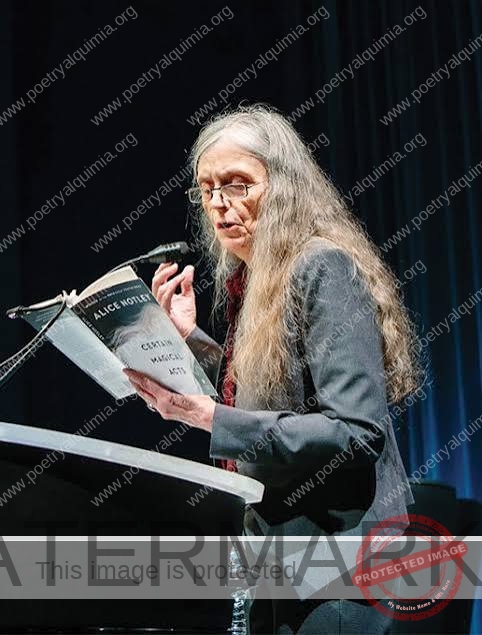
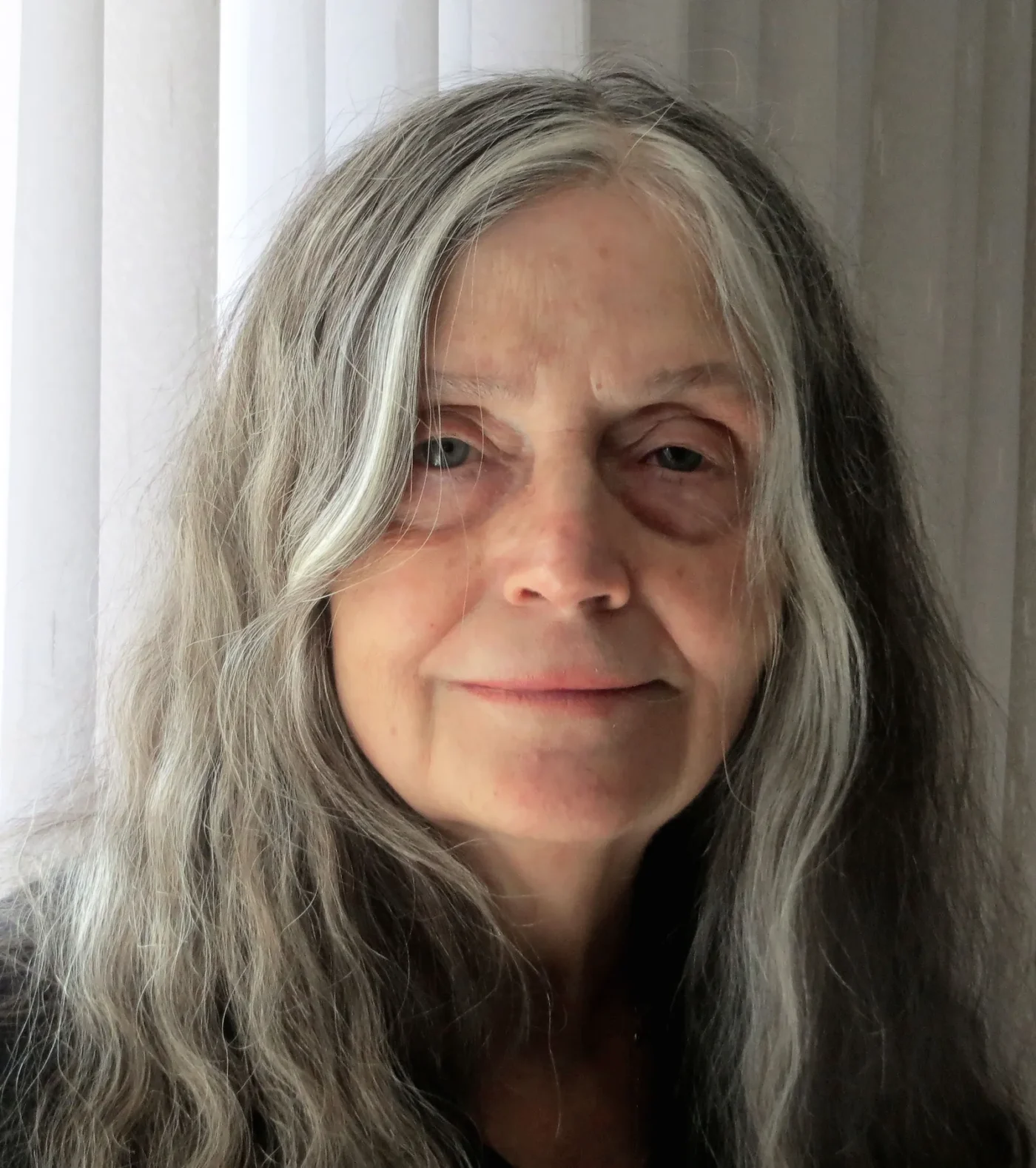
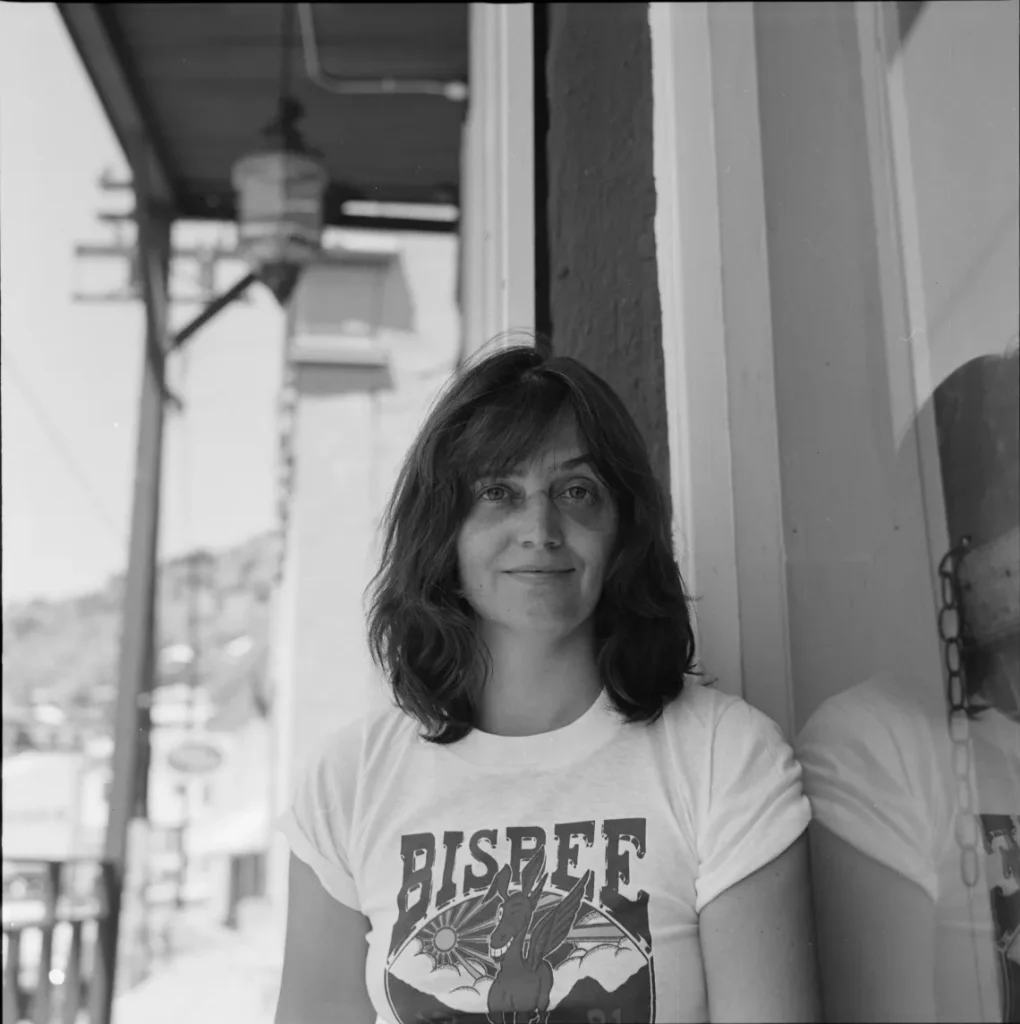
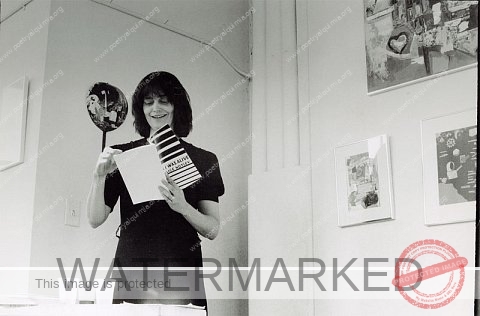
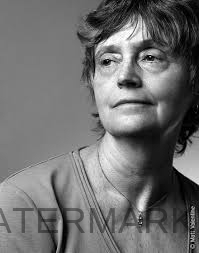
Alice Elizabeth Notley (Bisbee, Arizona, Estados Unidos, 8 de noviembre de 1945-París, Francia, 20 de mayo de 2025). Poeta miembro de la segunda generación de la Escuela de Poesía de Nueva York.
Se licenció en Barnard College en 1967 y obtuvo una maestría en Bellas Artes en el Taller de Escritores de Iowa en 1969. Durante su juventud, se mudó con frecuencia —a San Francisco, Bolinas, Londres, Essex y Chicago— y se casó con el poeta Ted Berrigan en 1972, con quien tuvo dos hijos. Ambos integraron la segunda generación de poetas de Nueva York junto a Ron Padgett, Jim Carroll y Anne Waldman, entre otros. A principios de la década de 1970, Notley se estableció en el Lower East Side de Nueva York, donde participó activamente en la escena literaria local durante varias décadas. En 1979, recibió una beca del Fondo Nacional para las Artes. Tras la muerte de Berrigan en 1983, se casó con el poeta británico Douglas Oliver.
Aunque Notley es a menudo identificada como un miembro destacado de la ecléctica segunda generación de la Escuela de Nueva York, su poesía también demuestra una continua fascinación por el desierto y sus habitantes.
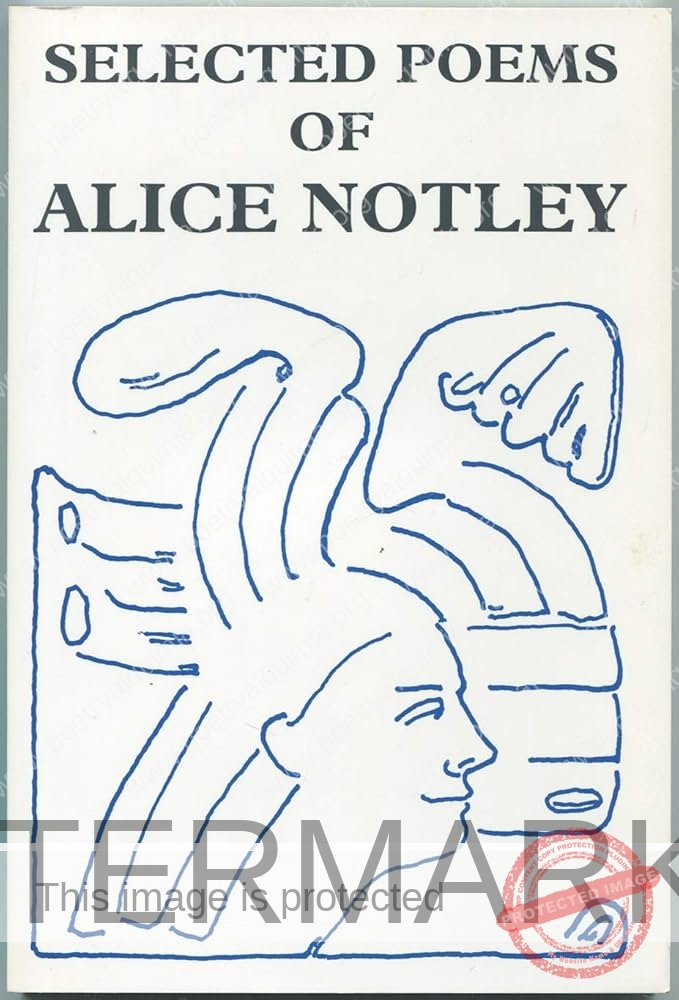
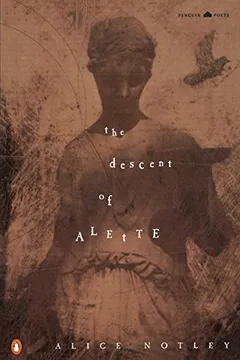
Sus colecciones de poesía incluyen Early Works (Fonograf Editions, 2022); Certain Magical Acts (Penguin, 2016); Songs and Stories of the Ghouls (Wesleyan University Press, 2011); Grave of Light: New and Selected Poems 1970–2005 (Wesleyan University Press, 2006), que recibió el Premio de Poesía Lenore Marshall 2007 de la Academia de Poetas Americanos al mejor libro del año; Disobedience (Penguin, 2001), ganador del Premio Internacional de Poesía Griffin 2002; Mysteries of Small Houses (Penguin, 1998); Selected Poems of Alice Notley (Talisman House, 1993); Margaret y Dusty (Coffee House Press, 1985); y Sorrento (Sherwood Press, 1984). La colección de Notley, How Spring Comes (Toothpaste Press, 1981), recibió el Premio de Poesía de San Francisco en 1982. Entre sus primeras obras se encuentran Waltzing Matilda (Kulchur Foundation, 1981); Alice Ordered Me to Be Made (Yellow Press, 1976); y 165 Meeting House Lane (C Press, 1971). También ha publicado Tell Me Again (Am Here Books, 1982), una autobiografía, y experimenta con las artes visuales. Su trabajo en este último campo incluye collages, acuarelas y bocetos.
Notley ha afirmado que su discurso es la voz de «la nueva esposa y la nueva madre» de su época, pero que su principal objetivo es crear poesía, más que presentar una plataforma de reforma social.
Ademas de los anteriores señalamos otros premios como el Premio Literario del Los Angeles Times de Poesía. También fue finalista del Premio Pulitzer. En 2001, recibió el Premio Óscar de Literatura de la Academia Estadounidense de Artes y Letras y el Premio Shelley Memorial de la Sociedad de Poesía de América. En 2015, fue galardonada con el Premio de Poesía Ruth Lilly.
Notley falleció el 19 de mayo de 2025 en París, Francia, donde había residido durante décadas. Tenía 79 años
Alice Notley dejó publicados mas de cuarenta libros de poesía. Se inspiró en la obra de William Carlos Williams, en su ruptura con la métrica y uso del lenguaje coloquial, de quien se consideraba heredera. También se inspiró en la obra de Gertrude Stein. Su poesía expresa con humor y delicadeza los matices y sutilezas de las relaciones interpersonales, en lugar de enfatizar su propia independencia emocional como mujer emancipada, al estilo de sus contemporáneas neoyorquinas Anne Waldman y Diane Wakoski.
Enlaces de interés :
https://www.newyorker.com/books/page-turner/alice-notley-and-the-art-of-not-giving-a-damn
https://www.abc.es/cultura/cultural/abci-alice-notley-201512022100_noticia.html


Deja una respuesta